
Best Face Wash for Oily & Acne-Prone Skin in Pakistan
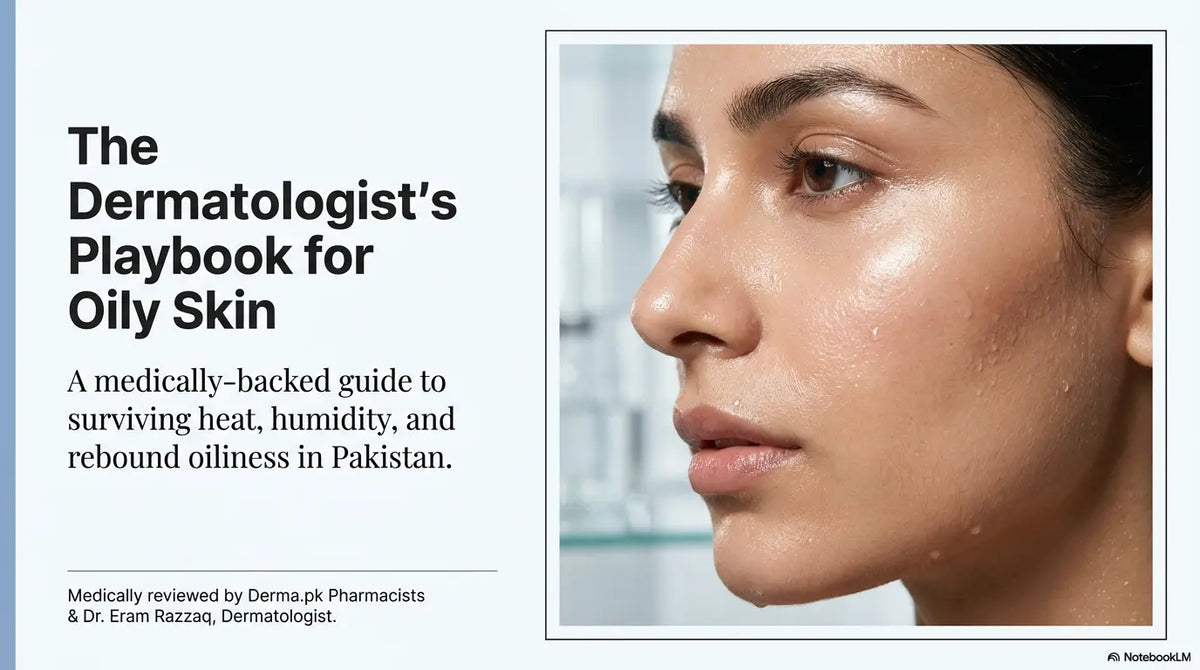
Medically reviewed by derma.pk's registered pharmacists and dermatologist Dr. Eram Razzaq. For personalised advice, consult a dermatologist. Last updated July 2026.
The best face wash for oily skin in Pakistan is a gel or foaming cleanser built on 0.5–2% salicylic acid, or a gentler niacinamide- or zinc-based formula, used twice daily and after heavy sweating. The right wash cuts shine and unclogs pores without stripping the skin — a balance that matters in heat and humidity that keep sebum glands working overtime.
Key Takeaways
- Salicylic acid 0.5–2% is the single most useful cleanser active for oily, acne-prone skin — it is oil-soluble, so it cleans inside the pore, not just the surface.
- Gel and foaming textures suit oily skin best; creamy, low-lather washes are for dry or sensitive skin.
- Wash twice a day plus one extra rinse after heavy sweating — more than that strips the barrier and triggers rebound oiliness.
- A face wash manages oil and helps prevent clogged pores, but it cannot clear moderate or severe acne alone; leave-on treatments do the heavy lifting.
- Dermatologist-grade cleansers in Pakistan span roughly PKR 550–1,850, and most solid oil-control face washes sit between about PKR 650 and 1,250.
In this guide:
- How do you pick a face wash for oily, acne-prone skin?
- Which ingredients matter in an oil-control face wash?
- Why do harsh face washes make oily skin worse?
- How often should you wash your face in Pakistan's heat?
- Which face-washing mistakes make oily skin worse?
- Can a face wash alone clear acne?
- Frequently asked questions
- Where to buy the best face wash for oily skin in Pakistan
How Do You Pick a Face Wash for Oily, Acne-Prone Skin?
Match three things: a texture that rinses clean (gel or foam), an active that fits your main concern (salicylic acid for clogged pores and breakouts; niacinamide or zinc for shine without much acne), and a formula gentle enough to use twice a day without leaving skin tight. Everything else on the label is marketing.
Texture is the quickest filter, because it decides how the wash behaves on already-oily skin:
| Texture | How it feels | Best for |
|---|---|---|
| Gel | Lightweight, spreads easily, rinses off with no residue | Oily and acne-prone skin; the default choice for humid weather |
| Foaming | Airy lather with the deepest degreasing feel | Very oily skin and sweaty summer months — pick a sulfate-gentle formula |
| Cream or milky | Cushiony, low lather, leaves a soft film behind | Dry, sensitive, or eczema-prone skin; usually too rich for oily faces |
On the label, look for the phrases non-comedogenic (formulated not to clog pores), oil-free, and pH-balanced. Skip bar soaps meant for the body, anything heavily fragranced, and washes with rough scrub particles if you have active breakouts. Derma.pk's collection of dermatologist-approved face washes can be filtered by skin type, which makes this shortlisting much faster.
Price is not the deciding factor. Dermatologist-grade cleansers in Pakistan span roughly PKR 550–1,850, and most reliable oil-control face washes sit between about PKR 650 and 1,250 — effective oil control does not require an imported price tag.
Which Ingredients Matter in an Oil-Control Face Wash?
Salicylic acid at 0.5–2% is the benchmark active for oily, acne-prone skin, with niacinamide, zinc, and tea tree playing useful supporting roles. Here is how the common options compare:
| Ingredient | Typical strength in a cleanser | What it does | Who it suits |
|---|---|---|---|
| Salicylic acid (BHA) | 0.5–2% | Oil-soluble acid that travels into the pore and dissolves the plug of sebum and dead cells behind blackheads and pimples | Oily, acne-prone, blackhead-prone skin |
| Niacinamide | 2–5% | Supports the skin barrier and, used consistently, helps regulate visible oiliness | Combination skin; anyone who finds acid washes drying |
| Zinc (zinc PCA) | Around 1% | Mild astringent mineral that helps reduce surface shine and calm irritation | Very oily, shiny skin |
| Tea tree oil | Up to 5% | Plant antiseptic with mild activity against acne-related bacteria | Mild, occasional breakouts; a plant-based preference |
| Glycolic acid (AHA) | 1–2% | Water-soluble exfoliant that lifts dull surface cells and smooths rough texture | Oily skin with dullness or uneven texture; skip it on inflamed acne |
Salicylic acid earns its reputation because it is the only common cleanser acid that dissolves in oil. Instead of sitting on the surface, it follows sebum down into the pore lining and loosens congestion at its source. To get real value from salicylic acid face washes, massage the lather over damp skin for a full 30–60 seconds before rinsing — the acid needs contact time to work.
One honest caveat a pharmacist will always give: in a rinse-off product, every active works at a discount. Niacinamide in a face wash is a helpful bonus, not a hero treatment — the leave-on serums in Derma.pk's niacinamide range deliver far more of it to the skin. Judge a cleanser first on how skin feels ten minutes after rinsing: comfortable and fresh, not tight and squeaky.
Pharmacist-picked examples stocked at Derma.pk:
- Invoke Salicylic Acid Acne Control Face Wash 50ml — a compact salicylic acid wash that is easy to trial before committing to a full-size bottle.
- Maxitech Acne Soft Face Wash 120ml — a daily wash formulated for oily, acne-prone skin at the affordable end of the range.
- Beotiv Oil-Free Acne Face Wash 120ml — an oil-free formula for skin that shines by midday and breaks out around the T-zone.
- Hudson Facial Salicylic Acid Cleanser 100ml — a salicylic acid cleanser at the premium end of the local options.
Why Do Harsh Face Washes Make Oily Skin Worse?
Stripping away every trace of oil damages the skin barrier and signals sebum glands to produce more — a rebound effect that shows up as midday shine, fresh clogged pores, and skin that is somehow both greasy and flaky. Harsh washing is the most common self-inflicted mistake in oily-skin routines.
The warning signs are easy to spot: a squeaky-clean feeling, tightness that lasts more than a few minutes, stinging when you apply the next product, or flaking around the nose and mouth. That squeak is not cleanliness — it is the sound of a stripped barrier. Healthy skin sits on the mildly acidic side (around pH 5), while traditional soaps are strongly alkaline and push skin far outside its comfort zone.
Dermatologist organizations such as the American Academy of Dermatology consistently advise gentle cleansing rather than aggressive scrubbing for acne-prone skin, because friction and irritation aggravate breakouts. Gentle does not mean weak: a well-formulated 2% salicylic acid gel cleans pores more effectively than any amount of hard rubbing.
If a twice-daily acid wash leaves your skin tight, keep it for the night wash only and use a plain, pH-balanced gentle cleanser in the morning. Alternating this way keeps the benefit and drops the irritation.
How Often Should You Wash Your Face in Pakistan's Heat?
Twice a day — morning and night — plus one extra rinse after heavy sweating is the right frequency for oily skin in Pakistan's climate. Anything more works against you.
Morning: a quick cleanse removes the sebum and sweat that build up overnight and preps skin for sunscreen. If your skin tolerates it, this can be your salicylic acid wash; if not, plain gentle cleanser is enough.
Night: this is the non-negotiable wash. It takes off sunscreen, excess oil, and the fine dust and smog that settle on skin during a Lahore commute or a day in traffic anywhere. Massage for a full minute and rinse thoroughly along the hairline and jaw, where cleanser residue loves to clog pores.
After sweat: in Karachi-level humidity, sweat sits on the skin and mixes with sebum, and that film is a setup for clogged pores and fungal overgrowth in the folds of skin. After sports, a motorbike ride, or load-shedding hours without a fan, rinse with plain water or use your gentle cleanser — save the acid wash for the scheduled slots. Blotting papers through the day beat a third or fourth wash.
Humid months deserve their own playbook — Derma.pk's guide to monsoon skincare in Pakistan covers the seasonal adjustments, and the wider oil-control skincare range pairs well with any cleanser chosen from this guide.
Which Face-Washing Mistakes Make Oily Skin Worse?
Most oily-skin frustration comes from technique, not the product. These are the mistakes pharmacists at Derma.pk hear about most often:
- Washing with hot water: heat strips skin lipids and leaves the face red and reactive. Lukewarm or cool water cleans just as well and is far kinder to the barrier.
- Scrubbing active acne: walnut-shell and apricot scrubs create micro-tears on inflamed spots and spread bacteria across the face. A salicylic acid wash exfoliates chemically without the trauma.
- Washing four or five times a day: each extra wash strips more oil, and the skin answers with more sebum. Rebound oiliness is real and it shows up within days.
- Skipping moisturizer afterwards: dehydrated skin overproduces oil to compensate. A light, non-comedogenic pick from the oil-free moisturizers range keeps skin balanced without adding shine.
- Using body soap on the face: body bars are alkaline and formulated for tougher skin. On the face they cause exactly the stripping-and-rebound cycle described above.
- Rough or reused towels: scrubbing dry irritates skin, and a damp towel hanging in a bathroom grows bacteria. Pat dry gently with a clean, dry towel — and change it often in sweaty weather.
Can a Face Wash Alone Clear Acne?
Honestly, no. A face wash is on your skin for less than a minute, so it can control oil, keep pores clearer, and remove the sweat and sunscreen that contribute to breakouts — but it rarely clears established acne by itself.
What a good cleanser realistically does: reduces excess sebum, helps prevent new blackheads and whiteheads, and preps skin so leave-on treatments absorb properly. Mild comedonal acne — scattered blackheads and small bumps — often improves noticeably with a consistent salicylic acid wash. Inflamed pimples, deep jawline breakouts, and frequent flare-ups need leave-on actives that stay on the skin for hours, which is where acne and oil-control treatments come in.
For the full treatment picture — ingredient routines, purging, and when medication makes sense — read Derma.pk's complete guide on how to treat acne. And if acne is nodular, cystic, painful, or leaving scars, skip the trial-and-error entirely: that pattern needs a dermatologist, not a new cleanser.
Frequently Asked Questions
How often should I wash an oily face?
Twice a day — once in the morning and once at night — plus a single extra cleanse or plain-water rinse after heavy sweating or exercise. Washing an oily face four or five times a day strips the skin barrier, triggers rebound oil production, and often makes shine and breakouts worse. If skin feels tight or stings after washing, the routine is too aggressive.
Is salicylic acid face wash good for acne?
Yes — salicylic acid is the most useful cleanser ingredient for acne-prone skin. It is oil-soluble, so it travels into the pore and loosens the plug of sebum and dead cells that starts blackheads, whiteheads, and pimples. In a face wash, 0.5–2% used once or twice daily helps reduce new breakouts, though stubborn or inflamed acne also needs a leave-on treatment.
Can a face wash alone clear acne?
No. A face wash stays on the skin for under a minute, so it can control oil and help prevent clogged pores, but it cannot treat established acne on its own. Mild blackheads may improve with a salicylic acid wash; anything more needs leave-on actives, and painful nodules or cystic acne need a dermatologist. Think of the cleanser as step one of a routine, not the whole treatment.
Which face wash is best for combination skin?
A lightweight gel cleanser with a lower strength of salicylic acid, or a gentle pH-balanced formula with niacinamide, suits combination skin best. It degreases the oily T-zone without stripping the drier cheeks. Avoid strong foaming washes that leave the whole face tight, and adjust by season — combination skin in Pakistan usually turns oilier in summer and drier in winter.
Should men use a different face wash?
No — skin does not need a gendered formula. Men's skin tends to be slightly oilier and thicker on average, so many men simply do well with gel or foaming salicylic acid washes. Pick by skin type and concern, not by the label. Men who shave should avoid gritty scrubs over freshly shaved or irritated skin.
What should you apply after washing an oily face?
Follow every wash with a light, oil-free, non-comedogenic moisturizer — skipping it leaves skin dehydrated and pushes oil glands to produce even more sebum. In the morning, finish with a broad-spectrum sunscreen, since exfoliating cleansers make sun protection more important. At night, a moisturizer alone, or layered over an acne treatment, is enough.
Where to Buy the Best Face Wash for Oily Skin in Pakistan
Derma.pk is a licensed, pharmacist-run dermatological store stocking 100% authentic face washes sourced directly from registered manufacturers — no repacked or expired stock. Browse the full face wash collection to filter by skin type, ingredient, and budget, or start with the salicylic acid picks above.
Shop with confidence: every order ships with Cash on Delivery across Pakistan and fast nationwide delivery to Karachi, Lahore, Islamabad and all major cities. Unsure whether your skin needs salicylic acid, niacinamide, or just a gentler routine? Derma.pk's pharmacist team is available to recommend the right cleanser for your skin type before you spend a rupee.
 Snail Mucin for Skin: Benefits, How to Use It & the Best Products in Pakistan
 K-Beauty 101: The Science Behind Korean Skincare's Global Rise
 Under-Eye Dark Circles: Causes & Treatments That Actually Work
 Fungal Skin Infections in Pakistan: Ringworm, Jock Itch & Athlete's Foot