Melasma & Pigmentation Creams

Clinical Precision: Melasma & Pigmentation Creams Hyperpigmentation and melasma are complex skin conditions characterized by the overproduction of melanin, often triggered by hormonal fluctuations, UV...

Sort by:

Skinoren Cream 10G

Skinoren Cream 10G

Rs.755.00

Pay only

Rs.

289

now

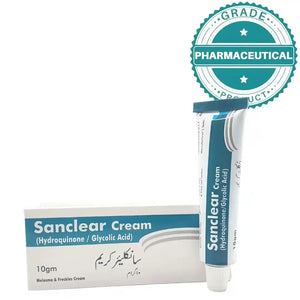
SANCLEAR CREAM

SANCLEAR CREAM 10gm

Rs.220.00

Pay only

Rs.

84

now

White Balance

White Balance Cream 20g - Best Cream for Pigmentation

Rs.990.00

Pay only

Rs.

379

now

CUTE-E CREAM ADVANCE FORMULA FOR MELASMA & FRECKLES 30g

CUTE-E CREAM ADVANCE FORMULA FOR MELASMA & FRECKLES 30g

Rs.1,239.00

Pay only

Rs.

474

now

Healers Pharma

Healers Pharma 5% Transamin + Gluta Complex Skin Brightening Cream (15g)

Rs.1,950.00

Pay only

Rs.

747

now

REVODERM ADVANCE PIGMENT REDUCING COMPLEX 30gm

REVODERM ADVANCE PIGMENT REDUCING COMPLEX 30gm

Rs.590.00

Pay only

Rs.

226

now

Ruxotib cream

Ruxotib Cream 1.5% (Ruxolitinib Phosphate) – 5g

Rs.1,995.00

Pay only

Rs.

764

now

MELANO CREAM 25mg

Melano Cream 25g (Kojic Acid, Vitamin C & E) | Buy Skin Lightening Cream Online | derma.pk

Rs.650.00

Pay only

Rs.

249

now

MELASCO MELASMA CREAM FOR HYPERPIGMENTATION 30gm

MELASCO MELASMA CREAM FOR HYPERPIGMENTATION 30gm

Rs.850.00

Pay only

Rs.

325

now

essential healthcare

DarkOut Skin Brightening Cream (30g)

Rs.1,790.00

Pay only

Rs.

686

now

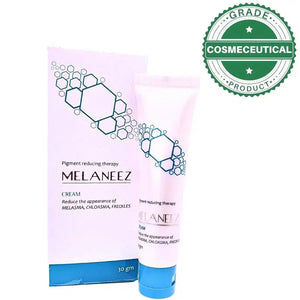
MELANEEZ CREAM 30gm PIGMENT REDUCING THERAPY

MELANEEZ CREAM 30gm | PIGMENT REDUCING THERAPY

Rs.750.00

Pay only

Rs.

287

now

RETRIEVE CREAM

RETRIEVE Cream 30g - Revitalizing Treatment for Healthier Skin

Rs.372.00

Pay only

Rs.

142

now

Deep-Seated Clarity: A Dermatological Approach to Melasma

Melasma differs from standard sunspots because it is often "dermal" or "mixed," meaning the pigment sits deeper in the skin layers. Treating it requires a patient, science-based strategy. At Derma.pk, we focus on a "Triple-Lock" mechanism: preventing pigment formation, blocking its transfer, and accelerating its removal.

The Power of Tyrosinase Inhibitors

Tyrosinase is the enzyme responsible for the first step in melanin production. Clinical creams utilize specific inhibitors to shut down this process:

  • Alpha Arbutin: A natural derivative of hydroquinone that provides brightening results without the risk of long-term side effects.
  • Kojic Acid: Derived from fungi, it lightens visible sun damage and age spots while providing antioxidant benefits.
  • Tranexamic Acid: Originally a medical ingredient, it is now a gold standard for melasma as it calms the vascular pathways that trigger pigment flare-ups.

Why Melasma is Heat-Sensitive

A unique challenge with melasma is its sensitivity to heat (infrared radiation). Unlike standard freckles, melasma can darken even if you stay in the shade but are in a hot environment. Professional-grade creams often include anti-inflammatory agents to cool the skin's internal response and prevent "rebound" pigmentation. This is why daily, broad-spectrum protection—and avoiding steam or excessive heat—is vital during treatment.

The Role of Cellular Turnover

Existing dark spots are stored in the upper layers of the skin. To fade them, you must encourage the skin to shed these pigmented cells. Ingredients like Azelaic Acid and Glycolic Acid act as gentle "resurfacers." By speeding up the birth of new, unpigmented skin cells, these clinical creams reveal a brighter complexion more quickly than traditional moisturizers alone.

Strategic Layering and Maintenance

Success in treating pigmentation is built on consistency. Dermatologists recommend applying corrective creams to clean skin, followed by a rich barrier-repair moisturizer to prevent irritation. Because the skin "remembers" its pigment-producing habits, a maintenance phase is essential even after the spots have faded. At Derma.pk, we provide the tools for both the intensive correction phase and the long-term protection phase.

Frequently Asked Questions

1. What is the difference between melasma and regular dark spots?

Melasma usually appears as larger, symmetrical patches (often on the cheeks, forehead, or upper lip) and is linked to hormones and heat. Dark spots (sunspots) are smaller, individual spots caused primarily by cumulative UV damage over years.

2. Can melasma be cured permanently?

Melasma is a chronic condition that can be managed into "remission" where it is invisible. However, because it is triggered by internal factors, it can flare up again with sun exposure or hormonal shifts. Consistent use of clinical creams and SPF is key to keeping it away.

3. How long does it take to see results on deep pigmentation?

Skin cells renew every 28 to 40 days. You should expect to see the first signs of fading after 4 to 6 weeks of consistent use. For deep-seated melasma, full clinical results usually take 3 to 4 months.

4. Are these creams safe for sensitive skin?

Many of our products use "buffered" actives like Niacinamide and Alpha Arbutin, which are generally well-tolerated. However, if you have very reactive skin, we recommend a "patch test" on your jawline for 24 hours before full-face application.

5. Can I use pigmentation creams during pregnancy?

"The mask of pregnancy" is a common form of melasma. While ingredients like Azelaic Acid and Vitamin C are often considered safe, you should always consult your doctor before using any corrective treatment while pregnant or breastfeeding.

6. Will these products bleach my natural skin tone?

No. Clinical pigmentation creams are "brighteners," not "bleachers." They target overactive melanocytes (the cells making dark spots) rather than affecting your skin's natural, healthy melanin.

7. Why is my pigmentation getting darker after starting the cream?

As the cream increases cell turnover, deep pigment is pushed to the surface before it flakes away. This can make the spot look temporarily darker for 1–2 weeks. If the area is also red or itchy, you may be using the product too frequently.

8. Do I need to apply the cream to my whole face?

For symmetrical melasma, a whole-face application ensures an even tone. For individual dark spots or acne marks, you can use the cream as a "spot treatment" to concentrate the active ingredients on the affected area.

9. Why is sunscreen non-negotiable?

UV rays act as a "switch" for pigment. Even 10 minutes of unprotected sun exposure can undo weeks of progress with your brightening cream. Always use a Dermatologist Sunblock with SPF 50+ every single morning.

10. Can I use these creams with Retinol?

Yes, but be careful. Using them together can increase efficacy but also the risk of irritation. A common clinical routine is to use your Brightening Cream in the morning and your Retinol at night to allow the skin time to recover.