
Best Retinol Cream in Pakistan 2026 — Price, Brands, Guide
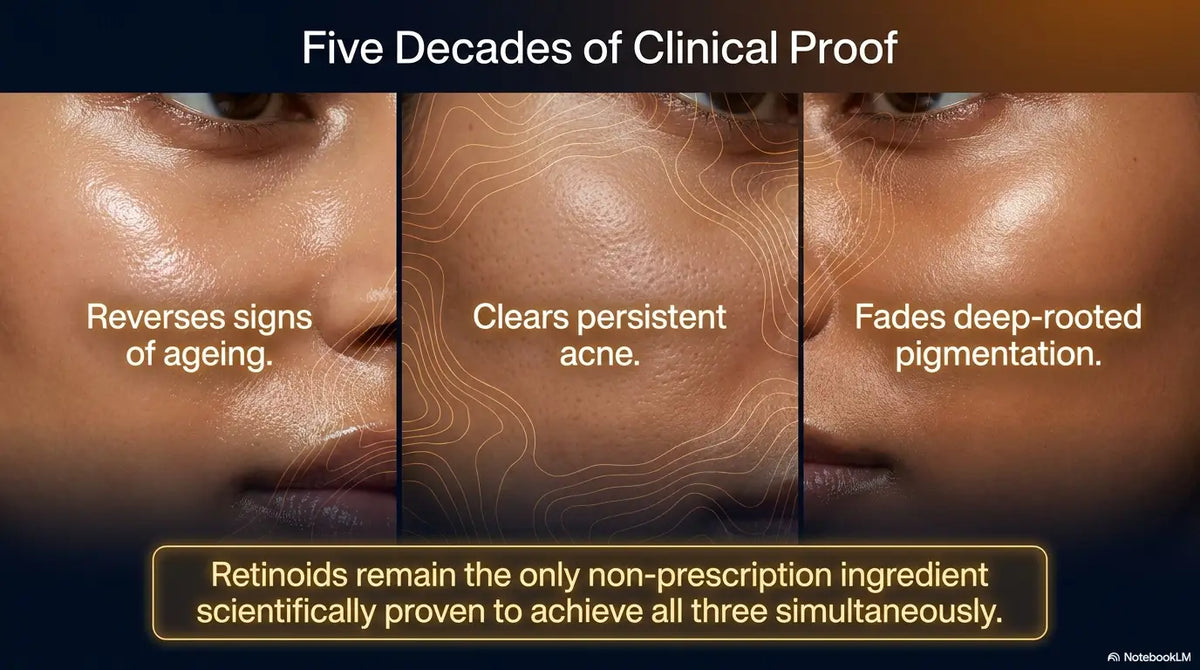
Retinol remains the undisputed gold standard of skincare. Backed by over five decades of clinical research, it is the only non-prescription ingredient proven to significantly reverse signs of ageing, clear persistent acne, and fade deep-rooted pigmentation. However, in the Pakistani climate—where heat and intense sun exposure are prevalent—using this powerhouse ingredient requires a strategic, climate-aware approach.
This guide explores the science of retinoids, how to navigate the different strengths and retinol creams available in Pakistan’s market, including popular brands and pricing, and the correct way to build a retinol routine that yields visible results without damaging the skin barrier.

Understanding the Retinoid Family
Not all Vitamin A derivatives are created equal. The "Retinoid Umbrella" covers several forms, ranging from gentle over-the-counter (OTC) retinol creams and retinol serums to high-potency medical treatments commonly prescribed by dermatologists. These include formulations with specialized ingredients like retinal liposome and ceramides to enhance skin renewal and barrier support.
Retinol (The Beginner’s Choice)
Retinol is an OTC derivative that must be converted by your skin’s enzymes into retinoic acid. This multi-step conversion makes it much gentler, making it the ideal starting point for those with sensitive skin or those primarily focused on preventative anti-aging and hydration. Popular retinol 0.3 cream variants like Cosrx The Retinol 0.3 Cream 20ml are readily available in Pakistan for such users.
Tretinoin (The Clinical Powerhouse)
Tretinoin is pure retinoic acid. Because it requires no conversion, it begins working the moment it touches the skin. It is significantly more potent than retinol, offering faster results for deep wrinkles, severe texture issues, and stubborn pigmentation, but it also carries a higher risk of "purging" and irritation.
Adapalene (The Acne Specialist)
Adapalene is a synthetic, third-generation retinoid. Designed to be more stable in sunlight and more selective in how it targets skin receptors, it is widely considered the best option for oily and acne-prone skin in Pakistan due to its ability to deep-clean pores with less redness than traditional tretinoin. This makes it a preferred acne treatment ingredient in many retinol serums and creams.
How to Choose Your Strength
Choosing the right concentration is a balance between your skin goals and your skin’s natural tolerance, especially given the local climate, lifestyle, and the range of retinol cream options available in Pakistan.
-
For Beginners or Sensitive Skin: Start with low-concentration retinol creams or serums (0.25% to 0.5%). This allows the skin to gradually build "retinization"—the process by which skin cells adapt to increased turnover without excessive irritation.
-
For Experienced Users: Once your skin tolerates lower strengths nightly, moving to 1% retinol or 0.1% Adapalene can provide a noticeable boost in collagen production and texture refinement. Products like Medicube Retinol NMN Boosting Serum 30ml offer enhanced anti-aging benefits with additional moisturizing and skin-renewal properties.
-
For Targeted Repair: Prescription-strength options (0.025% to 0.05%) are typically reserved for those treating active cystic acne, photo-damage, or hyperpigmentation under professional dermatological guidance.

The Protocol: How to Apply Retinoids Safely
The number one reason people fail with retinol creams is "too much, too soon." Follow this structured timeline to ensure success while protecting your skin’s moisture barrier and supporting skin renewal.
The "Sandwich Method"
To minimize irritation, apply a layer of lightweight, moisturizing cream first, followed by a pea-sized amount of your retinol cream or retinol serum, and then another layer of moisturizer. This creates a buffer that slows down absorption and helps maintain skin hydration without neutralizing the benefits. Including ceramide-rich moisturizers can further strengthen the skin barrier during retinol use.
The Introductory Schedule
-
Weeks 1–2: Apply only twice a week (e.g., Monday and Thursday) to allow skin adjustment.
-
Weeks 3–4: Increase to three nights a week if no significant peeling or redness occurs.
-
Month 2+: Gradually move toward every other night. Only use retinol creams nightly if your skin feels completely hydrated and calm.
What to Expect: The Timeline of Results
Patience is the most important "ingredient" in any retinoid routine. Expect gradual improvements rather than overnight miracles. Skin renewal occurs over weeks to months as retinol and retinal liposome formulations stimulate collagen and cell turnover.
-
The Purging Phase (Weeks 1–4): You may experience "the purge"—where underlying congestion rises to the surface as breakouts. This indicates the skin is renewing itself, a common phase especially for acne-prone users and those using retinol creams for acne treatment.
-
The Glow Phase (Weeks 6–12): Surface texture begins to smooth out. Pores appear more refined, and the "retinol glow" (increased light reflection off the skin) becomes visible, enhancing skin brightness.
-
The Transformation (6 Months+): This is when deep collagen remodeling takes place. Fine lines begin to soften, pigmentation fades significantly, and skin elasticity improves.

Essential Safety Rules for the Pakistani Climate
-
Sunscreen is Non-Negotiable: Retinoids thin the outermost layer of dead skin cells, making you highly susceptible to sunburn and photo-damage. Applying broad-spectrum SPF 50+ every single morning—even if you stay indoors—is mandatory for effective skin protection.
-
Dry Skin Only: Never apply retinoids to damp or freshly washed skin. Water increases absorption speed, which can lead to immediate chemical burns, extreme peeling, or irritation.
-
Avoid the "Hot Zones": Do not apply product directly to the corners of the nose, the corners of the mouth, or the immediate eye area. These areas are prone to cracking and excessive dryness.
-
Storage Matters: Vitamin A is light-sensitive and unstable in heat. Store your retinol creams and products in a cool, dark drawer or a skincare fridge. In the intense summers of Lahore or Karachi, this is crucial to preserve product effectiveness and extend shelf life.
Who Should Avoid Retinoids?
Retinoids are not for everyone. They are strictly contraindicated during pregnancy and breastfeeding due to the risk of birth defects. Additionally, individuals with active eczema, rosacea flares, severely compromised skin barriers, or those on certain prescription medications should consult a dermatologist before incorporating any Vitamin A treatment.
Medical disclaimer: Individual responses vary. Retinoids are contraindicated in pregnancy.
Always patch test new products. Stop use and consult a dermatologist if severe irritation or allergic reaction occurs.
Derma.pk: Pharmacy License No. 05-352-0066-113523P, Bahria Town Lahore.
 Snail Mucin for Skin: Benefits, How to Use It & the Best Products in Pakistan
 K-Beauty 101: The Science Behind Korean Skincare's Global Rise
 Under-Eye Dark Circles: Causes & Treatments That Actually Work
 Fungal Skin Infections in Pakistan: Ringworm, Jock Itch & Athlete's Foot