Haemorrhage: Understanding Causes and Its Impacts
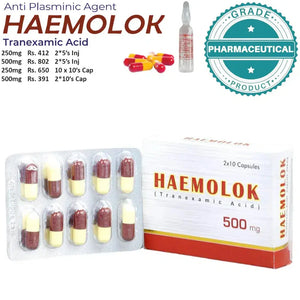
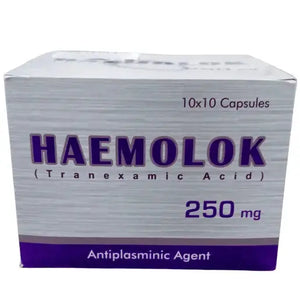
Haemolok Capsules (Tranexamic Acid) 500mg Pack of 20 Capsules
Frequently Asked Questions
What is haemorrhage and how does it occur?
Haemorrhage refers to the loss of blood due to the rupture of blood vessels. It can occur externally, from injuries or wounds, or internally, as a result of medical conditions like ulcers or aneurysms. Immediate treatment is essential to stop the bleeding and prevent complications.
What are the symptoms of haemorrhage?
Symptoms of haemorrhage include excessive bleeding from wounds or injuries, bruising, dizziness, weakness, or a rapid heart rate. In severe cases, internal haemorrhages can lead to shock, organ failure, or unconsciousness.
How can haemorrhage be treated?
Haemorrhage treatment depends on its severity. For external bleeding, applying pressure, and bandaging the wound can help. In more severe cases, blood transfusions, medications to promote clotting, or surgical procedures may be required to stop the bleeding.
What medications are used for haemorrhage control?
Medications like tranexamic acid help control bleeding by promoting clot formation. Other drugs, such as clotting agents and blood volume expanders, are also used to manage bleeding, especially during surgeries or after trauma.
Can haemorrhage be fatal?
Haemorrhage can be fatal if not treated promptly. Severe blood loss can lead to shock, organ failure, or even death. Early intervention is critical to managing the condition and preventing life-threatening complications.
What should I do if I experience severe bleeding?
If you experience severe bleeding, apply direct pressure to the wound, elevate the affected area if possible, and seek immediate medical attention. For internal bleeding or symptoms like dizziness or confusion, call emergency services right away.
Are there any risks associated with haemorrhage medications?
Haemorrhage medications, especially those that prevent blood clotting, may increase the risk of bleeding if not used properly. Always follow your doctor’s instructions and monitor for side effects like dizziness or excessive bruising.
How can I prevent haemorrhage?
Preventing haemorrhage involves avoiding trauma or injury, managing medical conditions like high blood pressure, and taking precautions during surgery. If you’re on blood-thinning medications, follow your doctor’s guidance to avoid excessive bleeding.
Is haemorrhage the same as a heart attack?
No, haemorrhage refers to excessive bleeding, while a heart attack is caused by a blockage in the heart’s blood supply. However, both conditions can lead to severe consequences if not treated promptly.
How long does it take to recover from a haemorrhage?
Recovery from haemorrhage depends on the severity of blood loss and the treatment received. Mild bleeding may heal within a few days, while more severe cases may require longer recovery times, including blood transfusions and rehabilitation.