


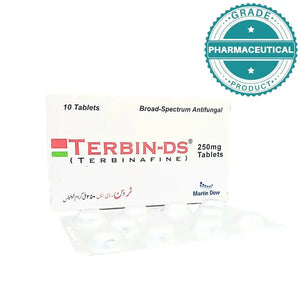
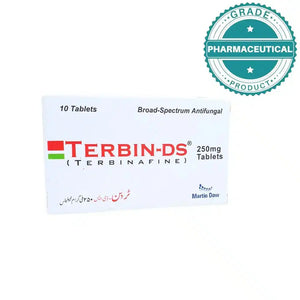
Terbin-DS 250mg Tablets (Terbinafine) - Pack of 10
Terbin-DS 250mg Tablets contain terbinafine hydrochloride, an oral allylamine antifungal that is fungicidal against dermatophytes. The DS strength (double strength) provides the standard adult once-daily dose in a single tablet. Prescription required. Used to treat onychomycosis (fungal nail infection), tinea capitis, tinea corporis, tinea cruris and tinea pedis where topical therapy is insufficient. Terbinafine accumulates in skin, hair and nails, allowing high cure rates over treatment courses ranging from 2 weeks for skin to several months for nails. Safety: hepatotoxicity, taste disturbance and rare severe skin reactions can occur. Baseline and periodic liver tests are recommended. Manufactured by Martin Dow.

Pay in 3 Installments of
Rs.
230


Terbin-ds 250mg Tablets (terbinafine) - Pack of 10
Description
TERBIN (TERBINAFINE) 250mg DS Tablets: A Comprehensive Guide
TERBIN-DS TABLET (terbinafine) are allylamines with
broad-spectrum antifungal properties. Terbinafine's chemical name is N(6,6dimethyl2hepten4inyl)Nmethyl1naphthalene
methylamine, with a molecular mass of 327.90
Composition:
-
Terbin Tablets: Each
tablet contains Terbinafine HCl (BP.) equivalent to Terbinafine -
TERBIN-DS TABLET:
Each tablet contains Terbinafine HCl (BP.) equivalent to Terbinafine
Therapeutic Indications:
Terbin and Terbin DS tablets are indicated for the treatment
of:
- Tinea capitis
- Onychomycosis (fungal nail infection) caused by
dermatophyte fungi - Fungal skin infections, including tinea corporis, tinea
cruris, tinea pedis, and yeast infections caused by Candida (e.g., Candida
Albicans) when oral therapy is appropriate - Note: Oral terbinafine is not effective for Pityriasis
versicolor
Clinical Pharmacology:
- Mechanism of Action:
Terbinafine is fungicidal against dermatophytes, molds, and certain dimorphic
fungi. Its activity against yeasts can be fungicidal or fungistatic, depending
on the species - Pharmacodynamics:
Terbinafine interferes with fungal sterol biosynthesis, leading to fungal cell
death - Absorption:
Terbinafine is well absorbed (approximately 70%), with a bioavailability of
about 50%. Peak plasma concentration is reached about 1.5 hours after a single
250 mg dose - Distribution:
Terbinafine accumulates rapidly in skin, hair, and nails, achieving levels
associated with fungicidal activity - Metabolism and
Excretion: Terbinafine is metabolized by the liver, excreted mainly in urine
(80%), and in feces (20%)
Drug Interactions:
- Cimetidine: Decreases
terbinafine clearance - Fluconazole:
Increases terbinafine Cmax and AUC - Ketoconazole and
Amiodarone: May increase terbinafine exposure - Rifampicin: Increases
terbinafine clearance - Caffeine: Terbinafine
decreases caffeine clearance - Desipramine:
Terbinafine decreases desipramine clearance - Ciclosporin:
Terbinafine increases ciclosporin clearance
Warnings and Precautions:
- Hepatic: Use with
caution in patients with hepatic conditions; monitor liver function - Renal: Use with
caution in patients with impaired renal function - Skin: Serious skin
reactions may occur rarely - Ophthalmologic:
Changes in the ocular lens and retina may occur - Immune: Monitor
complete blood count in patients with known or suspected immunodeficiency - Hematologic: Rare
cases of blood dyscrasias have been reported - Neurologic and
Senses: Disturbances in visual, auditory, and tactile senses may occur - Psychiatric: Anxiety
and depressive symptoms may occur
Special Population:
- Pregnancy: Avoid oral
terbinafine use during pregnancy - Nursing Mothers:
Terbinafine is excreted in breast milk; avoid breastfeeding during treatment - Geriatrics: Use with
caution in elderly patients
Overdosage:
Symptoms of overdosage may include headache, nausea,
epigastric pain, and dizziness. Treatment involves drug elimination, activated
charcoal administration, and symptomatic supportive therapy
Adverse Effects:
Common adverse effects include skin reactions,
gastrointestinal symptoms, headache, fatigue, and taste disturbances. Uncommon
effects may include paresthesia, while rare effects involve hepatobiliary
reactions, blood dyscrasias, and more
Stability:
Check the expiry date on the packaging
Packs:
Terbin is available in the following forms:
- Tablets 125mg (10's)
- DS Tablets 250mg
(10's)
Instructions:
- Keep all medicines
out of the reach of children - Store below 30 °C,
protected from light, heat, and moisture - Dispensed only on prescription
by a registered medical practitioner
Usage & Benefits
Key Benefits
- Standard 250mg once-daily adult dose in a single DS tablet - simple regimen for long courses
- Fungicidal against dermatophytes - associated with high mycological cure rates in nail infections
- Drug concentrates in skin, hair and nails, where dermatophyte infections live
- Effective for onychomycosis, tinea pedis, tinea cruris, tinea corporis and tinea capitis where oral therapy is needed
- Once-daily oral dosing supports adherence over multi-week or multi-month treatment
- Manufactured by Martin Dow - authentic prescription antifungal sourced through derma.pk
How To Use
How to Use
1. Use only with a doctor's prescription - baseline liver function tests are usually recommended.
2. Adults usually take one Terbin-DS 250mg tablet once daily, with or without food, at the same time each day.
3. Tinea corporis or cruris: typically 2-4 weeks. Tinea pedis: 2-6 weeks. Tinea capitis: about 4 weeks.
4. Onychomycosis: usually 6 weeks for fingernail infections and 12 weeks or more for toenail infections.
5. Complete the full course - nails improve slowly because the diseased part has to grow out.
Stop and contact your doctor immediately if you notice jaundice, dark urine, persistent nausea, severe taste loss, rash or signs of severe skin reaction. Avoid use in active or chronic liver disease unless specifically advised.
FAQs
What does DS mean in Terbin-DS?
DS stands for double strength - it indicates the 250mg tablet that delivers the standard adult once-daily terbinafine dose.
How long until I see results?
Skin infections often clear within a few weeks. Nail improvement is slow because the infection has to grow out - expect months for full nail recovery.
What are the main risks?
Liver enzyme rises and (rarely) serious liver injury, taste disturbance, gastrointestinal upset and rare severe skin reactions.
Do I need blood tests?
Yes, doctors usually check liver function before treatment and may repeat tests during prolonged therapy.
Can I drink alcohol while on Terbin-DS?
Limit or avoid alcohol - both terbinafine and alcohol can stress the liver, increasing the risk of liver injury.
Dermatologist Recommended


Healer's Pharma Minoxidil 5% + Finasteride 0.25% Hair Regrowth Spray

0.25% Finasteride Topical Hair Loss Spray by Healer's Pharma


