
How to Use Azelaic Acid for Your Skin: Benefits & Rosacea
If you struggle with redness, irritation, or bumps linked to rosacea, you may wonder how to calm and clear your skin effectively. Azelaic acid for your skin is a proven, gentle dicarboxylic acid treatment that tackles these concerns while supporting sensitive, rosacea-prone skin. This guide will walk you through the benefits, safe usage tips, and what to expect when incorporating azelaic acid treatment into your skincare routine for lasting relief and clearer, calmer skin.
What Is Azelaic Acid and Why Does It Matter for Your Skin?
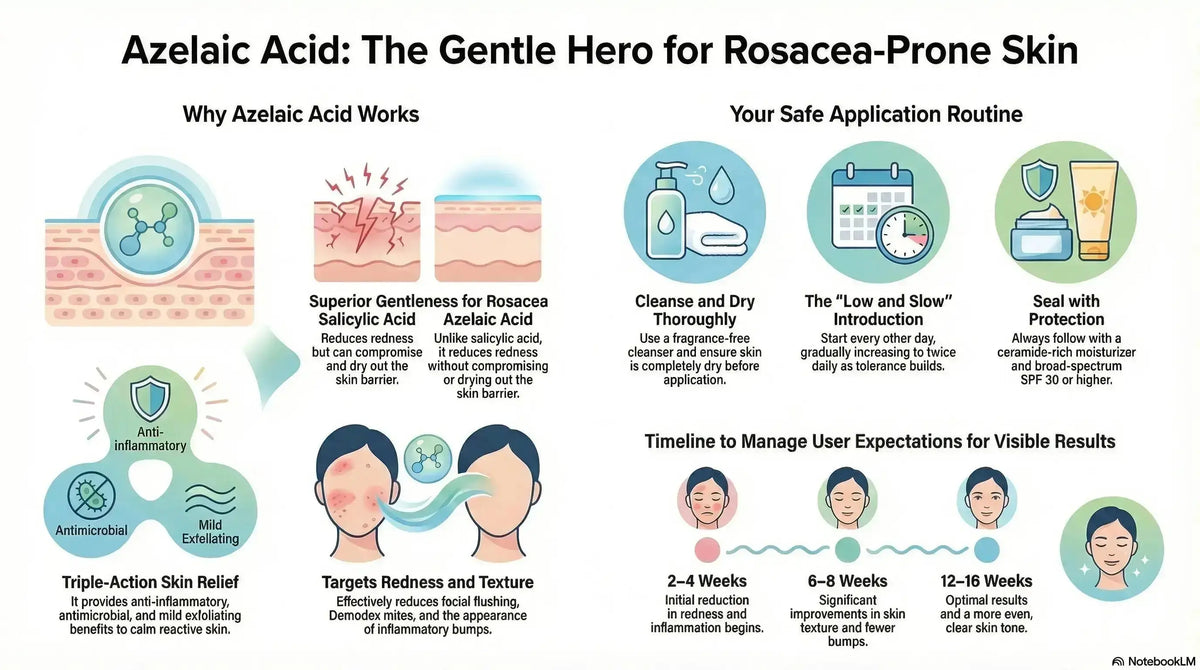
Azelaic acid is a naturally occurring dicarboxylic acid found in grains like barley and wheat and produced by the skin’s microbiome. Its unique combination of antimicrobial and anti-inflammatory properties, along with keratolytic (mild exfoliating) effects similar to alpha-hydroxy acid (AHA) treatments, makes it highly beneficial for various skin concerns. Unlike stronger acids such as salicylic acid, which can irritate and dry out reactive skin, azelaic acid soothes inflammation and reduces redness without compromising the skin barrier. This balance ensures your skin can improve gradually without aggravation and supports skin barrier repair for enhanced skin health over time.
Understanding Rosacea and Its Skin Challenges
Rosacea is a chronic inflammatory skin condition characterized by persistent facial redness, visible bumps, and skin irritation. It typically affects sensitive, reactive skin that can become easily aggravated by harsh products or environmental triggers. Managing rosacea requires a gentle and consistent skincare routine, focused on calming inflammation and protecting the skin’s immune system. Azelaic acid has emerged as a preferred choice for rosacea-prone skin due to its ability to reduce redness and irritation while addressing underlying causes, including microbial imbalance and skin sensitivity.
How Azelaic Acid Works for Rosacea: Key Benefits Explained
Azelaic acid's anti-inflammatory properties effectively reduce facial redness and swelling linked to rosacea flare-ups. Its antimicrobial action targets bacteria and Demodex mites, which are often involved in rosacea symptoms. Additionally, azelaic acid provides mild exfoliation that helps unclog pores without damaging the sensitive skin barrier. This gentle shedding improves skin texture and reduces the appearance of bumps. Beyond rosacea, azelaic acid is also used to fade melasma and other forms of hyperpigmentation, evens out uneven skin tone, and supports a clearer complexion. These benefits are well-supported by clinical studies demonstrating their efficacy and safety for long-term use, making it a versatile multi-benefit formulation suitable for daily skin care.
Forms of Azelaic Acid: Creams, Gels, Serums, and Foams
Azelaic acid is available in various formulations including creams, gels, serums, lotions, and foams. Azelaic acid cream and lotions often contain moisturizing ingredients and botanical actives, making them suitable for dry or sensitive rosacea-prone skin. Gels and foams tend to be lighter and better suited for oilier skin types. Azelaic acid concentrations typically range from 5% to 20%, with lower concentrations available as over-the-counter products and higher strengths often requiring a prescription. Choosing the right form depends on your rosacea severity, skin type, and tolerance—cream-based products offer soothing hydration and often include sunscreen, while gels provide a quick-absorbing texture with less residue and are more portable for skincare convenience.

How to Apply Azelaic Acid for Your Skin: Step-by-Step Guide
Begin by cleansing your face with a gentle, fragrance-free cleanser to avoid irritation. After your skin is completely dry, apply azelaic acid treatment following your serum if you use one and before moisturizing. Start by applying once daily or every other day to assess your skin’s tolerance. Gradually increase to twice daily as your skin builds tolerance, which helps maximize benefits while minimizing side effects. For sensitive skin, perform a patch test before full application by applying a small amount to a discreet area for a few days. Apply azelaic acid evenly over the entire face rather than spot treatments, ensuring consistent improvement. Always complete your morning routine by applying a ceramide moisturizer and a broad-spectrum SPF 30 or higher sunscreen to protect your skin from UV damage and prevent rosacea flare-ups. Using a multi-benefit formulation that includes sunscreen improves protection and convenience in daily skincare.
Can I use azelaic acid on my face daily?
Yes, azelaic acid can be used daily once your skin builds tolerance. Starting with once every other day helps minimize irritation, and with consistent use, most people can safely apply it twice daily to maximize effectiveness, especially for rosacea management.
What to Expect When Using Azelaic Acid for Rosacea
Typically, initial improvements in redness and inflammation begin after 4 to 6 weeks of consistent azelaic acid use. Full benefits, such as reduced bumps and even skin tone, become more apparent around 12 to 16 weeks. Early side effects might include mild stinging, dryness, or tingling that usually diminish as your skin adapts. To minimize irritation, consider using the “buffering” technique where you apply moisturizer first, then azelaic acid. Consistent application over the long term is key to managing rosacea symptoms and maintaining skin health safely.

Azelaic Acid Side Effects and How to Manage Them
Common side effects may include redness, dryness, flaking, and mild irritation, especially during the initial weeks of treatment. These effects generally decrease as your skin adjusts. To reduce irritation and reduce inflammation, lower your application frequency or apply a ceramide-rich moisturizer before azelaic acid. If irritation persists or worsens, discontinue use and consult a dermatologist. Special precautions are advised for pregnant women, children, or those with highly reactive skin, as they may require tailored recommendations to ensure safety and skin tolerance.
Azelaic Acid Purging: What It Is and How to Handle It
Purging refers to a temporary breakout caused by accelerated skin cell turnover, revealing underlying clogged pores. With azelaic acid, purging is less common but can occur early in the treatment process. This phase typically lasts a few weeks and subsides if you continue treatment gently. Patience is important; avoid stopping azelaic acid prematurely unless severe irritation arises. If purging persists beyond six weeks, seek advice from a skincare professional.
How Long Does It Take Azelaic Acid to Clear Rosacea?
Clinical studies and user experiences show that noticeable improvements in rosacea symptoms usually start within 2 to 4 weeks. More significant changes, including reduced redness and fewer bumps, become evident by 6 to 8 weeks. Optimal results often require consistent application over 12 to 16 weeks. Patience and adherence to the treatment routine, including daily sunscreen use, are essential for achieving and maintaining these benefits.
Azelaic Acid vs. Salicylic Acid for Rosacea: Which Is Better?
Azelaic acid and salicylic acid serve different purposes, especially regarding rosacea management. Azelaic acid's gentle anti-inflammatory and antimicrobial properties make it a superior choice for sensitive, rosacea-prone skin. In contrast, salicylic acid is a stronger exfoliant that may increase irritation and dryness, potentially worsening rosacea symptoms. For rosacea treatment, azelaic acid is typically preferred due to its calming effects and long-term safety. However, consult a dermatologist for personalized advice tailored to your skin’s needs.

Combining Azelaic Acid with Other Skincare Ingredients
Azelaic acid works well with retinol or retinoids but should be introduced gradually to minimize irritation. It also pairs effectively with vitamin C and niacinamide, offering antioxidant protection and supporting the skin barrier. When layering, apply vitamin C first, then azelaic acid, followed by moisturizer and SPF during the day. Avoid strong exfoliants like alpha-hydroxy acid (AHAs) or benzoyl peroxide alongside azelaic acid to reduce the risk of excessive dryness or irritation. For sensitive or reactive skin, introduce actives slowly and monitor skin response carefully.
Tips for Managing Rosacea-Prone Skin Alongside Azelaic Acid
Gentle cleansing is crucial; avoid harsh scrubs or irritating ingredients that can trigger flare-ups. Maintain a routine using a hydrating, fragrance-free moisturizer and broad-spectrum SPF 30 or higher every day to protect your skin from UV-induced redness. Lifestyle factors also impact rosacea management: steer clear of known triggers such as heat, spicy foods, alcohol, and stress. Regular consultations with a dermatologist are recommended for a personalized rosacea treatment plan and to adjust skincare products as needed.

Frequently Asked Questions About Azelaic Acid for Your Skin
Can azelaic acid make rosacea worse at first? Mild irritation or increased redness can occur initially as your skin adapts, but this usually subsides within a few weeks.
How long does azelaic acid take to work for rosacea? Improvements typically begin within 2-4 weeks, with more noticeable results after 12-16 weeks of consistent use.
Is azelaic acid safe for sensitive skin? Yes. It is gentle and well-suited for sensitive and rosacea-prone skin, especially when introduced gradually.
Is azelaic acid safe for long-term use? Absolutely. Its proven safety profile supports continued use to manage rosacea symptoms effectively.
Azelaic acid is effective for the treatment of acne, hyperpigmentation, and rosacea — helping to treat acne while brightening uneven skin tone. Unlike glycolic acid or chemical peels, it is gentle enough for daily use without significant downtime. Dermatologists also recommend pairing it with a broad-spectrum SPF moisturizer — remember to wear sunscreen every day to protect your skin's progress. Explore dermatologist-recommended skincare products, browse our range of acne treatment solutions, discover azelaic acid serums, and read more expert skin care guides — all available on Derma.pk with nationwide delivery across Pakistan.
 Snail Mucin for Skin: Benefits, How to Use It & the Best Products in Pakistan
 K-Beauty 101: The Science Behind Korean Skincare's Global Rise
 Under-Eye Dark Circles: Causes & Treatments That Actually Work
 Fungal Skin Infections in Pakistan: Ringworm, Jock Itch & Athlete's Foot