
Symptoms of Rosacea: A Complete Guide to Signs and Management
Are you struggling to understand the redness and bumps appearing on your face? Recognizing the symptoms of rosacea early can make a significant difference in managing this chronic skin condition that rosacea is a common among millions in the United States. This comprehensive guide will help you identify key signs, understand underlying causes, and explore effective treatments and lifestyle changes to control rosacea flare-ups and maintain healthy skin.
Understanding Rosacea: What You Need to Know
Rosacea is a chronic inflammatory skin condition marked primarily by persistent facial redness and visible blood vessels. It typically affects adults, more commonly women between 30 and 50 years old, but men can experience more severe symptoms. The condition mainly targets the central face areas and may impact quality of life through visible signs that influence confidence and daily social interactions. Early recognition of symptoms is crucial to prevent progression and improve symptom control through medical therapy and lifestyle management.

What Are the Primary Symptoms of Rosacea?
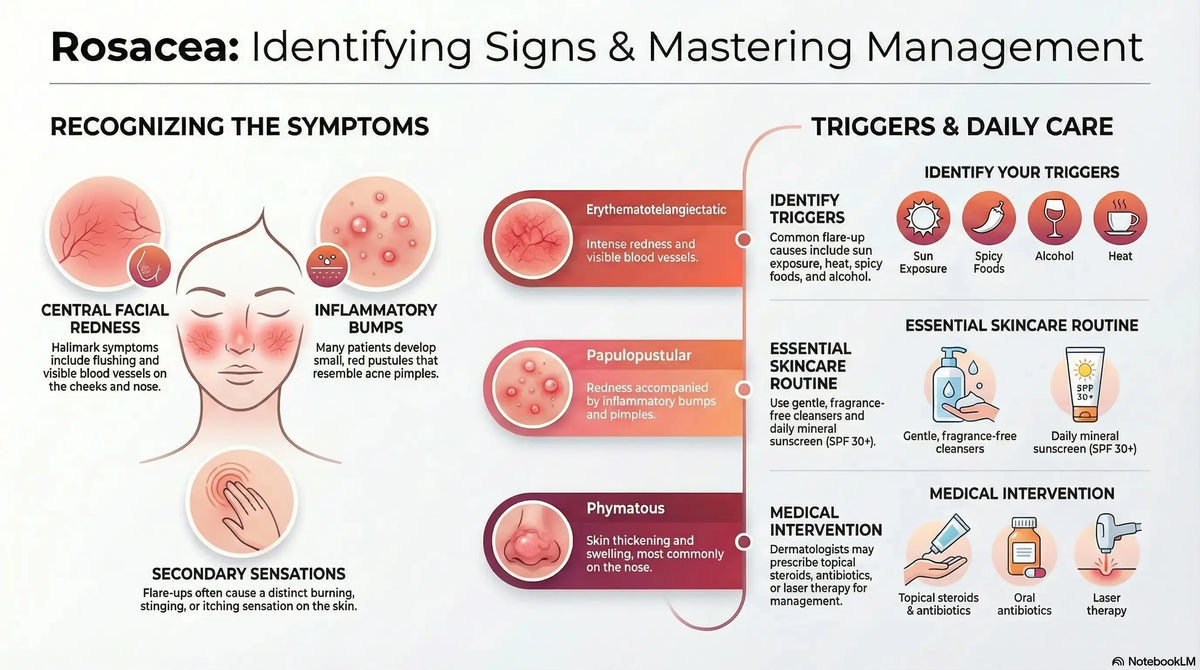
The hallmark symptoms of rosacea include facial redness often described as flushing, and visible blood vessels (telangiectasia) primarily on the cheeks, nose, and forehead. Many patients also develop inflammatory bumps or small pustules resembling pimples, commonly called rosacea pimples, especially in later stages. Some individuals may experience a burning or stinging sensation. Symptoms can vary widely among patients and differ across the four main rosacea types, with some showing more redness and others more swelling or ocular irritation.
Diagnostic Signs and Major Symptoms of Rosacea
Diagnosis hinges on clinical examination by a dermatologist focusing on the presence of diagnostic signs such as central facial flushing, persistent redness, and visible blood vessels. Major signs include these alongside papules and pustules, whereas secondary symptoms may involve swelling or eye involvement. A dermatologist’s assessment is vital to differentiate rosacea from other facial skin conditions and confirm diagnosis based on these characteristic signs. Because rosacea is unknown in exact cause, diagnosis relies heavily on clinical features and symptom patterns.
Types of Rosacea and Their Unique Symptoms
Rosacea presents in four main types, each with distinct symptoms. Erythematotelangiectatic rosacea involves intense redness and visible blood vessels. Papulopustular rosacea features redness with inflammatory bumps and rosacea pimples. Phymatous rosacea causes skin thickening and swelling, especially of the nose. Ocular rosacea affects the eyes, causing irritation, redness, and dryness. Understanding these types helps in tailoring treatment and identifying the symptoms you might experience.
Where Do Rosacea Symptoms Commonly Appear?
Rosacea symptoms most commonly appear on the central face, including the cheeks, nose, forehead, and chin. Less frequently, symptoms may affect the neck, scalp, ears, and eyes in cases of ocular rosacea. Recognizing these areas is helpful for symptom tracking and contributes to accurate rosacea diagnosis by clinicians.

Common Rosacea Flare-Up Symptoms and Their Patterns
During flare-ups, patients often experience increased redness, swelling, burning, and itching. Additional symptoms like papules and pustules may worsen temporarily. Typical rosacea flare-ups follow a pattern of remissions alternating with periods of intensified symptoms. The frequency and severity vary widely, requiring individualized strategies to manage and reduce these episodes effectively.
What Causes Symptoms of Rosacea? Understanding the Underlying Factors
Rosacea’s symptoms arise due to complex factors including skin inflammation, neurovascular dysregulation, and an abnormal innate immune system response. The presence of Demodex mites on the skin and genetic predisposition might play contributory roles. Researchers indicate that an exaggerated immune response leads to persistent inflammation and visible symptoms. Ongoing studies are exploring possible autoimmune components that may influence rosacea’s chronic nature.
Triggers That Can Worsen Rosacea Symptoms
Common triggers that provoke rosacea flare-ups include sun exposure, temperature fluctuations, spicy foods, alcohol, stress, and certain skin-care products. These factors activate neurovascular and immune responses leading to increased redness and bumps. Keeping a rosacea diary helps identify your personal flare triggers. Environmental factors like extreme heat or cold and lifestyle habits significantly affect symptom frequency and severity.
How Is Rosacea Diagnosed? Key Steps and Medical Evaluation
Rosacea diagnosis is primarily clinical, based on a thorough history and skin examination assessing characteristic signs and symptoms. There are no definitive lab tests, but dermatologists use diagnostic criteria to confirm the condition. Referral to an ophthalmologist may be necessary for ocular rosacea to manage eye symptoms adequately and preserve vision.
Medical Treatment Options for Managing Rosacea Symptoms
Managing rosacea involves a range of oral and topical medications targeting redness, inflammatory bumps, and swelling. Anti-inflammatory therapies including antibiotics and prescription medication such as topical steroids control inflammation. Procedural treatments such as laser and phototherapy light help reduce visible blood vessels and skin thickening in phymatous rosacea. Eye drops and medications effectively treat ocular rosacea to relieve irritation and dryness.

Skin Care Tips and Lifestyle Management to Reduce Symptoms
Effective skin care is vital to control rosacea symptoms and prevent flare-ups. Gentle cleansing with mild, non-abrasive products avoids irritation to the sensitive rosacea skin. Daily use of broad-spectrum mineral sunscreen with SPF 30+ is essential to protect against sun exposure, a major rosacea trigger, so choose products that include sunscreen. Choose skincare products that are fragrance-free, non-irritating, and formulated for rosacea-prone skin, often containing botanical actives or anti spot herbal complex. Lifestyle changes, including stress management, avoiding spicy foods and alcohol, and maintaining a rosacea diary, empower patients to reduce flare frequency and severity.
How to Recognize and Reduce Symptoms During Rosacea Flare-Ups
Recognizing early flare symptoms like sudden redness or stinging allows you to act promptly. Using cold compresses reduces burning sensations, while adhering to prescribed rosacea medications helps control inflammation. It’s important to avoid known triggers such as spicy foods, sun exposure, and stressful activities during flare-ups to minimize symptom escalation.

Mental Health Impact: How Rosacea Symptoms Affect Self-Esteem and Social Life
The visible symptoms of rosacea can negatively impact self-esteem and confidence, affecting social interactions and emotional well-being. Many patients experience embarrassment or withdrawal due to facial redness and bumps. Seeking support from mental health professionals and patient support groups can provide coping strategies. Improvements in symptoms through medical treatment also contribute positively to social comfort.
Frequently Asked Questions About Symptoms of Rosacea
What are 5 symptoms of rosacea? The main symptoms include facial redness, visible blood vessels, flushing, inflammatory bumps (papules and pustules), and burning or stinging sensations.
Can rosacea symptoms go away? Rosacea is a chronic condition; symptoms can be managed and reduced but not completely cured. With effective treatment and lifestyle management, patients may experience long periods of remission.
What is commonly mistaken for rosacea?
Rosacea is often confused with other skin conditions such as acne, seborrheic dermatitis, lupus, or allergic reactions. A dermatologist's evaluation is important to distinguish rosacea from these conditions based on symptom patterns and clinical signs.
When to See a Doctor for Rosacea Symptoms
Seek medical care if symptoms worsen, become painful, or if you develop eye irritation suggestive of ocular rosacea. Early referral to a dermatologist is essential for personalized diagnosis and to start effective treatment aimed at controlling inflammation and preventing complications.
 Snail Mucin for Skin: Benefits, How to Use It & the Best Products in Pakistan
 K-Beauty 101: The Science Behind Korean Skincare's Global Rise
 Under-Eye Dark Circles: Causes & Treatments That Actually Work
 Fungal Skin Infections in Pakistan: Ringworm, Jock Itch & Athlete's Foot