
Understanding Scabies: Symptoms, Causes and Treatment
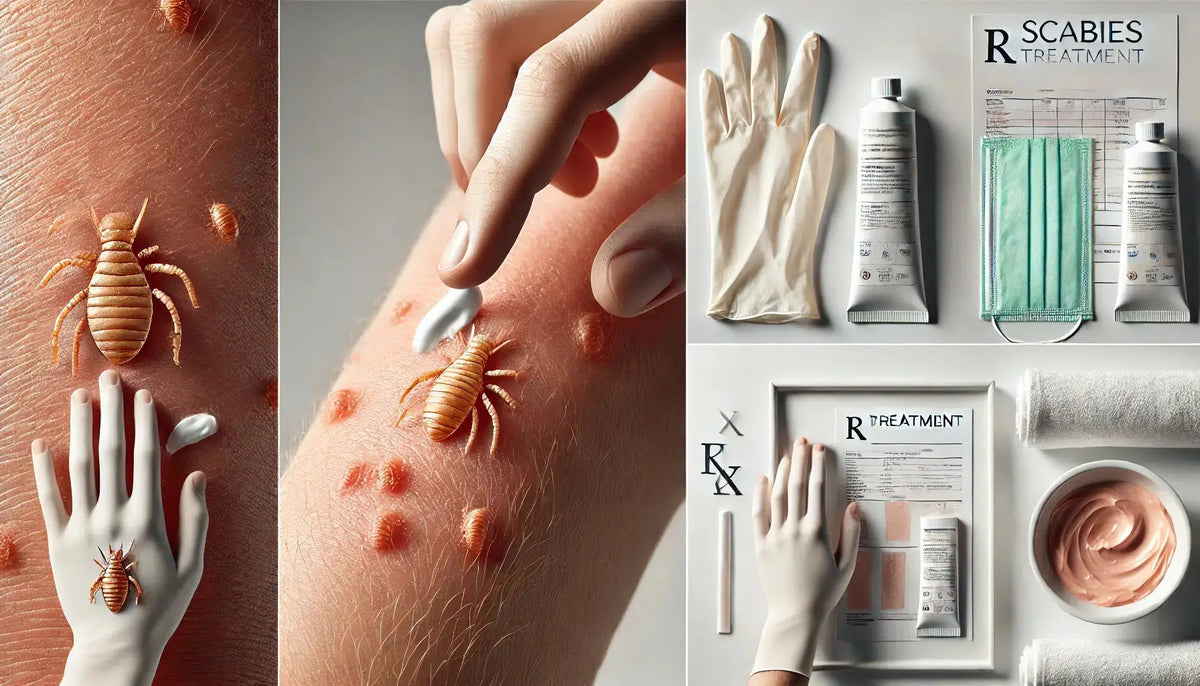
Scabies is a highly contagious skin condition caused by Sarcoptes scabiei, a microscopic mite that burrows into the skin and triggers intense itching and a rash. Early identification and the right scabies treatment are key to stopping it from spreading.
Symptoms of Scabies
- Intense itching — often worse at night, when mites are most active.
- Rash — small, red, pimple-like bumps or blisters.
- Burrow marks — thin, wavy lines tracing the mites' path under the skin.
- Secondary infections — scratching can lead to bacterial infections such as impetigo.
Dermatologist-Recommended Treatments
Permethrin cream is the usual first-line treatment — applied from the neck down, left on for 8–12 hours, then washed off, and repeated after 7 days if needed. Oral ivermectin is an effective alternative when topical treatment fails or in large-group outbreaks. Antihistamines can ease the intense itching during treatment, and medicated skin treatments may help if a secondary infection develops.
Preventing Reinfection
- Treat all close contacts at the same time, even those without symptoms.
- Wash all bedding, clothing, and towels in hot water.
- Avoid skin-to-skin contact until treatment is complete.
- Once cleared, soothe dry, itchy skin with a gentle moisturiser suited to sensitive skin.
Conclusion
Scabies can be distressing, but with prompt treatment and good hygiene it is entirely manageable. If you suspect scabies, consult a dermatologist for a tailored plan — book at Skin Clinic, Lahore.
 Snail Mucin for Skin: Benefits, How to Use It & the Best Products in Pakistan
 K-Beauty 101: The Science Behind Korean Skincare's Global Rise
 Under-Eye Dark Circles: Causes & Treatments That Actually Work
 Fungal Skin Infections in Pakistan: Ringworm, Jock Itch & Athlete's Foot