


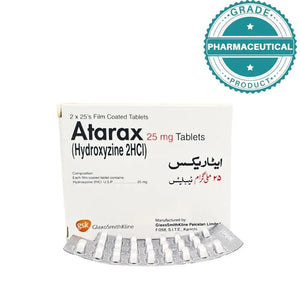

ATARAX TABLETS (HYDROXYZINE 2HCI) 25mg PACK OF 50 FILM COATED TABLETS
ATARAX TABLETS (HYDROXYZINE 2HCI) Pack of 2 x 25’s Film Coated Tablets, Product by GSK GlaxoSmithKline, To be Used as Directed by Physician
Atarax is a medication containing Hydroxyzine dihydrochloride available in film-coated tablets and syrup
It is prescribed for anxiety relief in adults, pruritus treatment, and premedication before surgical procedures
The recommended dosage varies based on age and condition, with special considerations for elderly, renal, and hepatic impairment patients
Atarax should not be used in certain medical conditions, including pregnancy, severe hepatic or renal failure, and known QT interval prolongation risk factors
Common side effects include somnolence, headache, and dry mouth. Caution is advised due to potential interactions and driving impairment

Pay in 3 Installments of
Rs.
46


Description
ATARAX TABLETS (HYDROXYZINE 2HCI) 25mg PACK OF 50 FILM COATED TABLETS: Comprehensive Drug Information
Active Ingredient: Hydroxyzine dihydrochloride Forms: Film Coated Tablets / Syrup
Indications:
- Atarax is a medication used for the treatment of the following conditions:
- Symptomatic relief of anxiety in adults: Atarax can provide relief for anxiety symptoms in adults
- Symptomatic relief of pruritus: It is effective in relieving itching associated with various conditions
- Atarax serves as a premedication option before surgical procedures.
Dosage and Administration:
Adults: The maximum daily dose for adults and children over 40 kg is 100 mg. For anxiety, a typical
dosage is 50 mg per day, divided into 3 separate administrations. In more severe cases, doses of up to 100 mg per day may be used. For pruritus, the starting dose is 25 mg at night, with adjustments up to 25 mg three or four
times daily. For premedication before surgery, 50 to 200 mg/day can be administered in 1 or 2 administrations
Children (from 12 months): For pruritus, the recommended dose ranges from 1 mg/kg/day to 2 mg/kg/day in divided doses. Maximum daily doses are based on body weight
Special Populations:
Elderly: Atarax should be used cautiously in the elderly, and starting with half the recommended dose is advised
In patients with moderate or severe renal function impairment, the dosage needs reduction due to decreased metabolite excretion in Renal Impairment.
Hepatic Impairment: Patients with hepatic dysfunction should have their daily dose reduced by 33%
Contraindications:
Atarax is contraindicated in the following cases:
History of hypersensitivity to hydroxyzine or any excipients, cetirizine, piperazine derivatives, aminophylline, or ethylenediamine
- Pregnancy and lactation
- Severe hepatic or renal failure
- Prostate adenoma with urinary retention
- Narrowangle glaucoma
- Porphyria
- Children below 12 months
- Concomitant therapy with monoamine oxidase inhibitors
- Known acquired or congenital QT interval prolongation
- Known risk factors for QT interval prolongation
- Known cardiovascular disease
- Significant electrolyte imbalances
- Family history of sudden cardiac death
- Significant bradycardia
- Concomitant use with drugs known to prolong the QT interval and/or induce Torsade de Pointes
Warnings and Precautions:
- Cardiac Arrhythmia: Atarax may prolong the QT interval, potentially leading to torsade de pointes.
Caution is needed in patients with known predisposing factors to cardiac arrhythmias - Administer Atarax cautiously in patients with an increased potential for convulsions, particularly in children, due to the risk of convulsions.
- Exercise caution in patients with pheochromocytoma due to the potential release of catecholamines.
- Driving and Alcohol: Atarax may cause sedation and impair reaction time, so patients should avoid operating vehicles or machinery and alcohol or sedating drug use
Interactions:
Atarax may interact with various drugs, including antihypertensive drugs, alcohol, CNS depressants, MAOIs, betahistine, cholinomimetic drugs, adrenaline, phenytoin, cimetidine, CYP2D6 substrates, and more. Careful consideration is needed when using these drugs concurrently
Pregnancy and Lactation:
Atarax is contraindicated for pregnant women and during lactation due to potential risks
Effects on Ability to Drive and Control Equipment:
Atarax can cause fatigue, dizziness, sedation, and visual disturbances, which may impact the ability to react and concentrate, particularly at higher doses. Patients should be cautious when driving or operating machinery
Adverse Effects:
Common adverse effects include somnolence, headache, and dry mouth. Uncommon effects encompass dizziness, insomnia, and constipation, among others. Rare adverse reactions may occur, including hypersensitivity, QT
interval prolongation, and hepatic abnormalities
Over-dosage:
An overdose of Atarax may lead to symptoms such as nausea, vomiting, tachycardia, somnolence, and more severe effects like respiratory depression and convulsions. Immediate medical attention is required in case of
overdose
Please note that this article provides comprehensive information about Atarax, but it should not replace professional medical advice. Consult a healthcare provider for personalized guidance and treatment
Usage & Benefits
Usage and Benefits of Atarax
- Anxiety Relief: Atarax provides effective relief from anxiety symptoms, helping to reduce nervousness and tension in adults.
- Itch Relief: It helps alleviate pruritus (itching) caused by various skin conditions, providing comfort and relief from discomfort.
- Surgical Premedication: Atarax is often used as a premedication before surgeries to calm patients and prepare them for anesthesia.
- Safe and Effective: It offers a safe and reliable option for managing symptoms of anxiety and itching under the guidance of a qualified healthcare provider.
How To Use
How to Use Atarax
Atarax should be taken according to your healthcare provider's instructions. Typically, the recommended dosage for anxiety in adults is 50 mg per day, divided into 3 doses. For pruritus, the initial dosage is 25 mg at night, which may be increased as necessary. For premedication, the daily dosage ranges from 50 to 200 mg.
It is important to follow the prescribed regimen precisely and not exceed the recommended dose without your doctor's approval. If you experience any adverse effects, contact your healthcare provider immediately.
FAQs
Frequently Asked Questions (FAQs)
1. What is Atarax used for?
Atarax is used for the symptomatic relief of anxiety, pruritus (itching), and as a premedication before surgical procedures. It is commonly prescribed to treat anxiety symptoms and reduce itching associated with various skin conditions.
2. How should Atarax be taken?
Atarax is typically taken in the form of film-coated tablets. The dosage depends on the condition being treated. For anxiety, the recommended dosage is 50 mg per day, divided into three doses. For pruritus, it starts with 25 mg at night, and for premedication before surgery, it can range from 50 mg to 200 mg daily. Always follow your healthcare provider's guidance.
3. What are the common side effects of Atarax?
Common side effects include somnolence (drowsiness), headache, dry mouth, dizziness, and constipation. In rare cases, it may cause QT interval prolongation and hypersensitivity reactions. Always inform your healthcare provider about any unusual symptoms.
4. Can Atarax be used during pregnancy or while breastfeeding?
No, Atarax is contraindicated during pregnancy and lactation due to potential risks to the baby. It is essential to consult your doctor for safer alternatives if you are pregnant or breastfeeding.
5. Are there any drug interactions with Atarax?
Yes, Atarax can interact with various medications such as antihypertensive drugs, alcohol, CNS depressants, MAOIs, and more. It is important to inform your healthcare provider of all medications you are taking to avoid potential interactions.
Dermatologist Recommended

Minoxidil 5% + Finasteride 0.25% Topical Hair Regrowth Solution


