

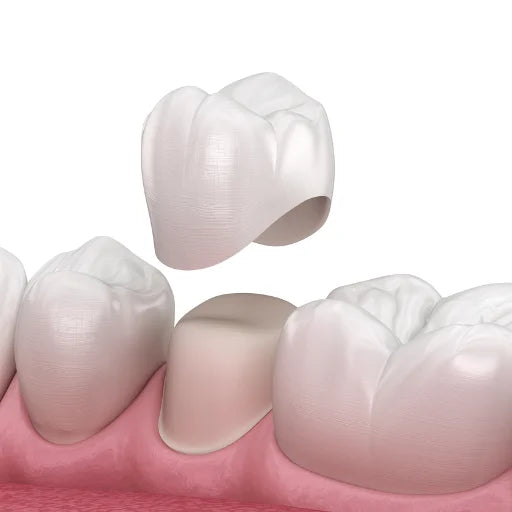
A dental crowns benefits, also known as a cap, is like a custom-made tooth that fits over your existing tooth to restore its shape, size, strength, and appearance. It’s like a tiny helmet for your tooth
Purpose of dental crowns benefits:
A dental crown, also known as a cap, is a tooth-shaped restoration that fits over a damaged or weakened tooth to restore its function, appearance, and strength. Think of it like a tiny, custom-made helmet for your tooth! Here’s a closer look at the purposes of dental crowns:
Protection:
- Shields a weak tooth: If a tooth has a large cavity, cracks, chips, or excessive wear, a crown can cover and protect it from further damage.
- Holds a cracked tooth together: A crown can hold the pieces of a cracked tooth in place, preventing the crack from spreading and potentially leading to tooth extraction.
- Provides support after root canal treatment: Teeth that have undergone root canal therapy become more brittle and susceptible to fracture. A crown provides the necessary strength and protection for these teeth.
Restoration:
- Repairs a broken or severely decayed tooth: Crowns can repair teeth with significant damage, restoring their natural appearance and function.
- Covers a dental implant: After placing a dental implant to replace a missing tooth, a crown is attached to the implant to complete the restoration and provide a natural-looking tooth.
- Replaces a large filling: When a filling is too large or the surrounding tooth structure is insufficient, a crown can replace it and provide a stronger, longer-lasting solution.
Aesthetics:
- Improves the appearance of a misshapen or discolored tooth: Crowns can reshape and cover teeth that are stained, severely discolored, or misshapen, improving your smile’s aesthetics.
- Completes a dental bridge: Bridges use crowns on adjacent teeth to anchor a false tooth in place, filling the gap left by a missing tooth.
In essence, dental crowns are versatile tools that play a crucial role in both protecting and restoring damaged teeth, while also contributing to a beautiful and confident smile.
Types of dental crowns:
Choosing the right type of dental crown depends on several factors, including the location and visibility of the tooth, your budget, and personal preferences. Here’s a breakdown of the main types available:

1. All-ceramic/All-porcelain crowns:
- Pros: Most natural-looking, great color match to surrounding teeth, good choice for front teeth, metal-free option for allergies.
- Cons: Less durable than metal crowns, may chip or crack under heavy chewing pressure.
- Cost: Higher than metal crowns.
2. Porcelain-fused-to-metal (PFM) crowns:
- Pros: Stronger than all-ceramic crowns, good aesthetics, well-established material.
- Cons: Metal lining may show at the gum line over time, not as natural-looking as all-ceramic options.
- Cost: Mid-range.
3. Metal crowns:
- Pros: Most durable, withstand chewing and biting forces well, long-lasting.
- Cons: Most noticeable, may not be aesthetically pleasing for visible teeth.
- Cost: Varies depending on metal used (gold being the most expensive).
4. Zirconia crowns:
- Pros: Very strong and durable, natural-looking, biocompatible (good for metal allergies), good choice for back teeth.
- Cons: More expensive than some other options.
- Cost: Higher than metal crowns, similar to all-ceramic.
5. Composite resin crowns:
- Pros: Less expensive, tooth-colored for aesthetics.
- Cons: Less durable, more prone to chipping and wear, may not last as long.
- Cost: Lowest.
Choosing the right crown:
- For front teeth: All-ceramic or zirconia crowns are usually preferred for their natural appearance.
- For back teeth: Metal or zirconia crowns are often recommended for their durability.
- For budget-conscious patients: Composite resin crowns may be an option, but keep in mind they may not last as long.
- For metal allergies: All-ceramic or zirconia crowns are safe alternatives.
Ultimately, the best crown for you will depend on your individual needs and preferences. Discuss your options with your dentist to determine the most suitable material for your specific situation.
Benefits of dental crowns benefits:
- Restoring function and strength: Damaged teeth can become weak and painful to chew with. A crown reinforces the tooth’s structure, allowing you to eat comfortably and efficiently.
- Protecting the tooth from further damage: A crown acts as a shield, preventing further decay, cracks, or chipping from worsening the existing damage.
- Improving aesthetics: Crowns can significantly enhance the appearance of misshapen, discolored, or damaged teeth, boosting your smile and confidence.
- Long-lasting solution: With proper care, dental crowns can last 10-15 years or even longer, providing a durable and cost-effective restoration.
- Saving a tooth that might otherwise need extraction: In some cases, a crown can save a severely damaged tooth, avoiding the need for extraction and potential implants or bridges.
Risks of dental crowns:
- Sensitivity: The prepared tooth may become more sensitive to temperature changes for a while after the procedure.
- Chipping or fracturing: All-ceramic crowns, while aesthetically pleasing, can be more prone to chipping or cracking than metal options.
- Discomfort: Some patients experience temporary discomfort or soreness after the procedure, which usually subsides within a few days.
- Loosening or falling out: In rare cases, a crown can loosen or fall out, requiring re-cementation or replacement.
- Allergic reaction: Although uncommon, some individuals may be allergic to the materials used in certain types of crowns.
- Nerve damage: Rarely, the preparation for a crown can irritate or damage the nerve inside the tooth, requiring root canal treatment.
Recovery and maintenance of dental crowns:
- Discomfort after the procedure: You may experience some sensitivity or soreness around the crowned tooth for a few days. Over-the-counter pain relievers can help manage discomfort.
- Dietary restrictions: Avoid very hard or sticky foods for a few weeks while your crown settles in. Opt for softer foods initially.
- Oral hygiene: Continue brushing and flossing regularly, paying special attention to the area around the crown to prevent decay and gum disease.
- Regular dental checkups: Schedule regular dental appointments for professional cleaning and monitoring of your crown’s condition.
- Avoid habits that can damage your crown: Refrain from chewing on ice, hard candy, or using your teeth to open packages, as these can chip or crack the crown.
Final Conclusion:
Dental crowns, custom caps for damaged teeth, offer protection, restoration, and aesthetics. While risks like sensitivity and chipping exist, proper care extends their lifespan significantly. Consulting your dentist helps determine the ideal crown type for your needs.
Derma and Dental Clinic:
Derma & Dental Clinic stands out with its team of experienced doctors backed by scientific evidence in their chosen fields. Their diverse range of medical-grade procedures offer tailored solutions for various skin and dental needs. You can confidently book your consultation online or by phone and embark on your journey towards healthier skin and a radiant smile.
Location: Bahria Town, Lahore
Specialties: Dermatology and Dental Care
Website: derma.pk
For Consultation:
- Online at Dermatology.pk
- WhatsApp: +923205999650
- Phone: 03041115000


