


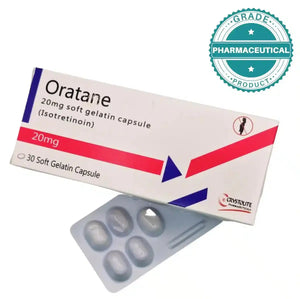
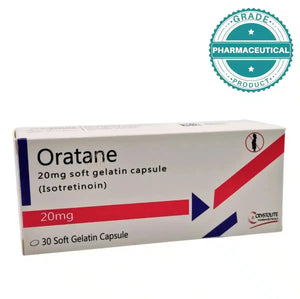
ORATANE TABLETS (Isotretinoin, soft gelatin capsule, 20mg by crystolite, Each Pack Contains 30 Capsules)
Oratane Soft Gelatin Capsules contain Isotretinoin, providing an effective solution for severe forms of acne
Dosage adjustments may be necessary since Oratane’s therapeutic response and adverse events vary between patients
A cumulative treatment dose of 120-150mg/kg has been shown to increase remission rates and prevent relapse.
Patients with renal impairment should start at lower doses, and Oratane is contraindicated during pregnancy and breastfeeding.
This article covers absorption, distribution, metabolism, elimination, teratogenicity, and more to ensure a thorough understanding of Oratane’s use and effects

Pay in 3 Installments of
Rs.
1148


Oratane is prescribed for severe acne, including nodular
conglobate acne and cases at risk of permanent scarring that haven't responded
to standard treatments
Termination of
Oratane therapy leads to endogenous retinoid concentrations within two weeks
Isotretinoin has
shown teratogenic potential in animal studies
It has therapeutic
implications for women of childbearing age and is contraindicated in pregnant
individuals
Oratane Soft Gelatin Capsules are available in blister packs
of 30 capsules
This comprehensive guide provides crucial information about
Oratane Soft Gelatin Capsules and their use in treating severe acne with
Isotretinoin. Always consult with your healthcare provider for personalized
treatment recommendations
Follow these guidelines for proper usage of ORATANE:
Always follow the specific recommendations of your healthcare provider to ensure the best possible outcome.
ORATANE (Isotretinoin) is primarily used for the treatment of severe acne, including nodular conglobate acne and cases at risk of permanent scarring that haven’t responded to standard treatments. It is an effective solution for persistent acne that doesn’t improve with other treatments.
ORATANE should be taken with food, once or twice daily. The typical dosage starts at 0.5mg/kg daily and can range from 0.5 to 1.0mg/kg per day depending on individual needs. Higher doses (up to 2.0mg/kg) may be required for severe acne. The treatment duration typically lasts between 16 to 24 weeks, with some cases continuing at lower doses for longer durations.
Common side effects of ORATANE include dryness of the skin, lips, and mucous membranes, skin disorders like rashes, pruritis, and facial erythema. Other side effects include musculoskeletal issues, behavioral disorders, hair thinning, and enhanced skin sensitivity to sunlight. Acne may worsen temporarily at the beginning of treatment but typically resolves within 7–10 days.
ORATANE is contraindicated in pregnant women and breastfeeding mothers due to its teratogenic potential. It is also not recommended for pediatric patients under 12 years of age. Individuals with renal impairment should use ORATANE with caution and at a lower starting dose.
ORATANE is absorbed in the gastrointestinal tract and is more bioavailable when taken with food. It is metabolized to form major metabolites like 4-oxo-isotretinoin and tretinoin. The drug works by reducing sebum production, which helps in controlling acne. The elimination half-life of unaltered isotretinoin is about 19 hours, and retinoid concentrations return to normal within two weeks after stopping therapy.


