
Atopic Dermatitis Treatment: Symptoms, Causes & Effective Treatments
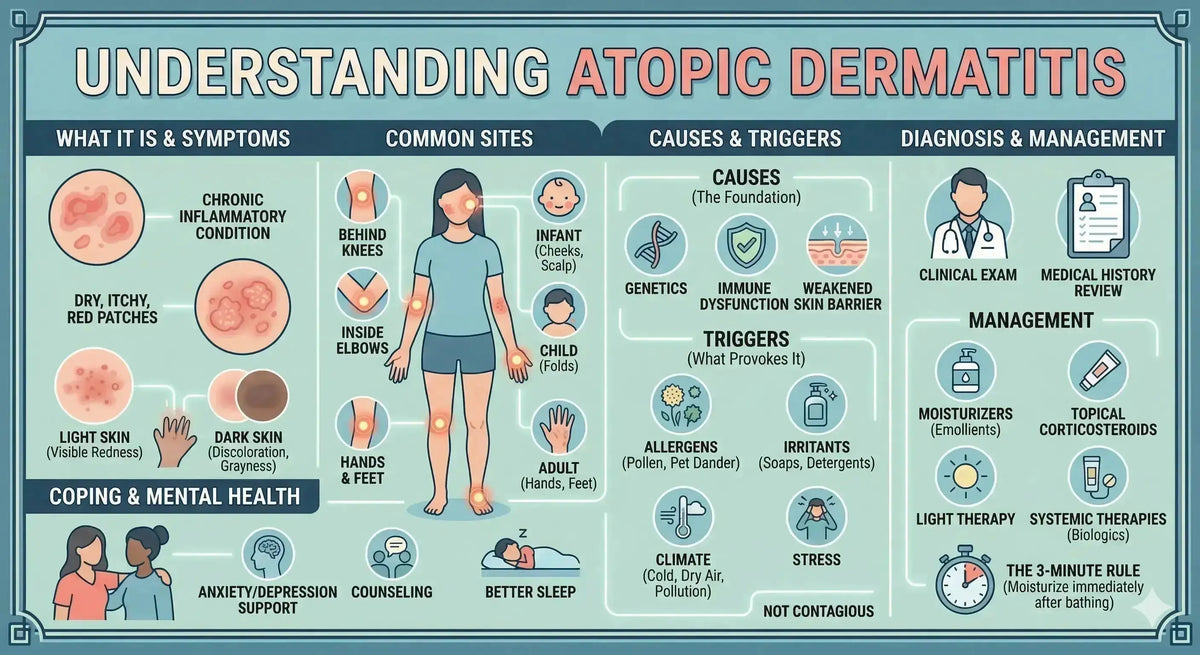
Atopic dermatitis is a widespread, chronic skin condition that affects millions of people across the United States. Characterized by dry, itchy, and inflamed skin, it can cause significant discomfort and impact daily life. In this comprehensive overview, you will learn about the symptoms, causes, diagnosis, and effective treatment options for atopic dermatitis. Whether you are experiencing flare-ups or managing this condition long-term, understanding these aspects will empower you to take control of your skin health and improve your quality of life.
What Is Atopic Dermatitis? Understanding the Condition
Atopic dermatitis, also known as atopic eczema, is a chronic inflammatory skin condition causing dry, itchy, and red patches of skin. Unlike other eczema forms such as contact dermatitis, which occurs from skin irritation or allergens, atopic dermatitis is mainly driven by genetic and immune factors. It is especially common in children but can affect adults as well. Most cases begin in infancy or early childhood, though adult eczema forms also exist. Knowing the nature of this condition is essential to managing symptoms and selecting the right treatments tailored to individual needs.
Hair Loss Treatment for Men: Proven Medications
Recognizing Atopic Dermatitis Symptoms
Typical symptoms of atopic dermatitis include intensely itchy, dry, red, and inflamed skin patches. These symptoms can vary depending on age and skin tone; for example, in lighter skin tones, redness is more visible, while darker skin may show areas of discoloration or dryness. Common areas affected are skin folds such as behind the knees and inside elbows, the face, hands, and feet. The severity ranges from mild irritation to severe atopic dermatitis with thickened, cracked, or bleeding skin. Symptoms often fluctuate, with flare-ups causing worsening discomfort and swelling.
Causes and Risk Factors of Atopic Dermatitis
Atopic dermatitis arises from a combination of genetic predisposition, immune system dysfunction, and a compromised skin barrier that allows moisture loss and irritant entry. Environmental triggers also play a major role; allergens like pollen, pet dander, irritants such as soaps and harsh detergents, changes in climate, and pollution can provoke symptoms. Risk factors include having a family history of eczema, asthma, or allergies, living in urban areas with dry climates, and exposure to harsh detergents. The hygiene hypothesis suggests that reduced exposure to microbes early in life may contribute to the rise in atopic dermatitis by preventing proper immune system development.
How Is Atopic Dermatitis Diagnosed?
Diagnosing atopic dermatitis primarily involves a clinical examination and thorough review of medical history. Dermatologists look for characteristic symptoms such as itchy red rashes located in typical areas, chronic or recurrent skin inflammation, and personal or family history of allergic conditions. Several diagnostic criteria are used worldwide to standardize diagnosis. It is important to rule out other skin conditions like psoriasis or contact dermatitis for accurate treatment. In rare cases where diagnosis is unclear, a skin biopsy or allergy tests may be conducted to confirm the condition and exclude infections.
Common Sites and Types of Atopic Dermatitis
Atopic dermatitis manifestations vary with age: infants often develop symptoms on their cheeks and scalp; children typically experience symptoms in the skin folds of the elbows and knees, while adults more commonly exhibit eczema on hands and feet. Rash appearance also differs across skin tones, ranging from red and inflamed skin to darker patches or scaling. There are different presentations—acute eczema showing weeping, blistered skin; subacute with dry, scaly patches; and chronic characterized by thickened, leathery skin. It is important to differentiate atopic dermatitis from other eczema types such as contact or discoid eczema as treatment approaches differ.

Understanding Symptoms Progression and Flare-Ups
Atopic dermatitis is a chronic, relapsing skin condition marked by periods of flare-ups and remission. During flare-ups, common signs include increased redness, swelling, skin that weeps or crusts, and thickened or cracked areas from frequent scratching. Scratching can worsen inflammation and increase risk of infection. Flare-ups reduce quality of life due to severe itch and discomfort, affecting sleep and daily activities. Recognizing triggers early and intervening promptly with treatment helps control symptoms and minimize flare-up frequency and severity.
Potential Complications of Atopic Dermatitis
People with atopic dermatitis are at risk of developing skin infections, particularly bacterial infections caused by Staphylococcus aureus, which may worsen inflammation. Chronic scratching can lead to skin thickening, known as lichenification, and occasionally skin bleeding from cracks. Persistent itch and visible skin changes can cause psychological distress including anxiety and depression, along with sleep disturbances. Managing complications effectively is essential to prevent further skin damage and improve overall wellbeing.

Effective Treatment Options for Atopic Dermatitis
The foundation of atopic dermatitis treatment begins with daily use of moisturizing creams or emollients that restore and maintain skin hydration and strengthen the skin barrier function. During flare-ups, prescription topical corticosteroids are the primary treatment to reduce inflammation and relieve itching, but they should be used under medical supervision to avoid side effects. Alternatives like topical calcineurin inhibitors provide effective options for sensitive areas or long-term management. Severe cases may require systemic therapies such as immunosuppressants or biologic medications prescribed by board-certified dermatologists. Phototherapy light, noted for its portable, compact, and user-friendly design with high radiation intensity, is another powerful treatment option, especially when topical medications alone are insufficient. Overall, personalized treatment plans developed with healthcare providers ensure safe and effective eczema management.
Self-Care and Skin Care Routine to Manage Atopic Dermatitis
Daily skincare routines greatly influence symptom control in atopic dermatitis. Gentle cleansing with mild, fragrance-free cleansers helps prevent skin irritation. Regular application of eczema-friendly moisturizing creams and lotions free from harsh chemicals supports skin hydration and repairs the skin barrier. Bathing should involve lukewarm water rather than hot, and the use of bath additives like colloidal oatmeal may soothe inflamed skin. Protective measures include wearing breathable, soft clothing to reduce irritation and avoiding known irritants. The “3-minute rule”—applying moisturizer immediately within three minutes after bathing—locks in moisture and helps maintain the skin's protective barrier.
Identifying and Avoiding Triggers to Prevent Flare-Ups
Common triggers for atopic dermatitis flare-ups include environmental allergens such as dust mites and pollen, irritants like soaps and detergents, stress, weather changes such as cold or dry air, and skin infections. Contact dermatitis, a separate condition caused by direct contact with irritants or allergens, can worsen atopic symptoms and should be distinguished by a healthcare provider. Lifestyle changes such as using hypoallergenic and multi-benefit formulation skincare products—including those with botanical actives and anti-spot herbal complex—reducing stress, and controlling indoor humidity can help minimize flare-ups. Careful observation and professional advice assist in identifying personal triggers and optimizing prevention strategies.

Living with Atopic Dermatitis: Coping and Mental Health Support
Living with atopic dermatitis can affect emotional wellbeing due to chronic itching and visible skin changes. Many patients experience anxiety, depression, and sleep disturbances related to discomfort and social stigma. Open communication with healthcare providers about mental health is crucial for comprehensive care. Support systems including counseling, support groups, and patient education empower individuals to manage both physical and psychological challenges associated with eczema, improving overall life quality.
Do and Don'ts in Atopic Dermatitis?
Do: Apply moisturizers regularly to maintain skin hydration, use gentle fragrance-free cleansers, identify and avoid personal triggers, follow prescribed treatments, and consult your dermatologist before trying new products or therapies.
Don't: Scratch affected areas to avoid worsening inflammation and risk of infection, use harsh soaps or skincare products with irritants, expose skin to extreme temperatures, or stop treatment abruptly without medical advice.
Managing atopic dermatitis treatment is a long-term process. For patients in Pakistan, explore dermatologist-recommended moisturizers, eczema creams, and expert skincare guides on Derma.pk. For related conditions, check our comprehensive guides on melasma treatment and skincare products available with cash on delivery in Pakistan.
 Snail Mucin for Skin: Benefits, How to Use It & the Best Products in Pakistan
 K-Beauty 101: The Science Behind Korean Skincare's Global Rise
 Under-Eye Dark Circles: Causes & Treatments That Actually Work
 Fungal Skin Infections in Pakistan: Ringworm, Jock Itch & Athlete's Foot