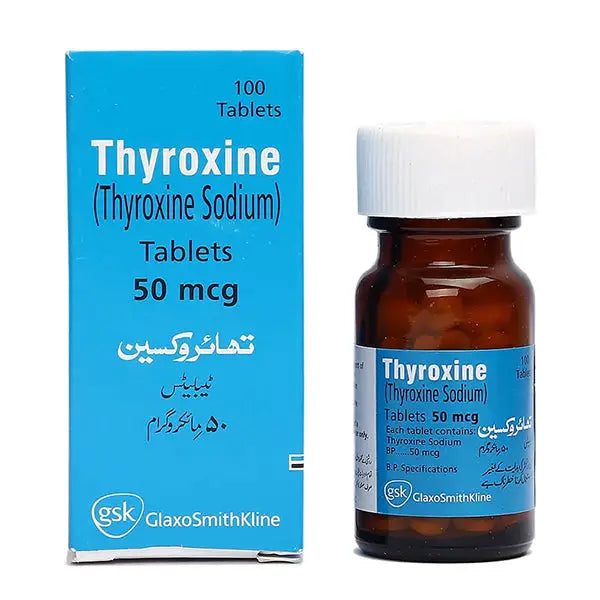

Thyroxine Tablets 100s – Levothyroxine Thyroid Hormone Replacement

Pay in 3 Installments of
Rs.
91


 JazzCash
 easypaisa
 NayaPay


 Bank transfer
Cash on Delivery
Bank transfer
Cash on Delivery
Description
Thyroxine Tablets 100s – Levothyroxine Thyroid Hormone Replacement
Thyroxine Tablets 100s contain Levothyroxine Sodium (synthetic T4), a prescription thyroid hormone replacement used to treat hypothyroidism — a condition where the thyroid gland fails to produce sufficient hormone. Levothyroxine restores normal thyroid hormone levels, correcting symptoms such as fatigue, weight gain, cold intolerance, slow metabolism, depression, and cognitive difficulties caused by an underactive thyroid.
Thyroxine has a narrow therapeutic index, meaning regular TSH monitoring is essential to ensure optimal dosing. Do not switch brands without re-testing TSH levels, as bioavailability may differ between formulations.
Benefits of Thyroxine Tablets 100s
- Replaces deficient thyroid hormone in patients with hypothyroidism
- Restores normal metabolism, energy, and body temperature regulation
- Improves fatigue, weight management, and mental clarity
- Supports healthy heart, brain, and digestive function
- Prevents goitre and manages other thyroid-related disorders
- Long-established synthetic T4 formulation with predictable absorption
How to Use Thyroxine Tablets 100s
Take one tablet once daily on an empty stomach, 30–60 minutes before breakfast, with a full glass of water. Taking with food significantly reduces absorption. Take at the same time every day for consistent hormone levels. Do not stop taking without consulting your doctor. Space calcium supplements, iron tablets, and antacids by at least 4 hours from your Thyroxine dose to avoid impaired absorption. Regular TSH monitoring is required to confirm appropriate dosing.
Safety Information
Prescription required — do not self-medicate. Narrow therapeutic index: overdose may cause thyrotoxicosis (palpitations, tremor, sweating, weight loss). Use with caution in elderly patients and those with cardiovascular disease — start at low doses. Multiple drug interactions: separate calcium, iron, and antacids by 4 hours. Do not switch brands without medical advice and TSH re-testing. Keep out of reach of children. Browse our prescription tablets and general medicines at Derma.pk.
Usage & Benefits
- Replaces deficient thyroid hormone in hypothyroidism patients
- Restores normal metabolism, energy levels, and body temperature regulation
- Improves fatigue, brain fog, weight management, and mood
- Supports healthy cardiovascular, brain, and digestive function
- Prevents goitre and helps manage thyroid-related complications
- Predictable absorption with established levothyroxine sodium formulation
How To Use
1. Take one tablet once daily on an empty stomach, 30–60 minutes before breakfast
2. Swallow with a full glass of water — do not crush or chew
3. Take at the same time every day for consistent thyroid hormone levels
4. Space calcium supplements, iron tablets, and antacids at least 4 hours apart from this medicine
5. Do not stop or change dose without consulting your doctor
6. Attend regular TSH blood tests as directed by your doctor
FAQs
What is Thyroxine used for?
Thyroxine (Levothyroxine Sodium) is a prescription thyroid hormone replacement used to treat hypothyroidism — when the thyroid gland produces insufficient hormone.
Why must I take it on an empty stomach?
Food, especially calcium and iron, significantly reduces absorption. Taking it 30–60 minutes before breakfast ensures optimal bioavailability.
Can I switch to a different brand?
Do not switch brands without medical advice. Different formulations may have different bioavailability — TSH must be re-checked after any switch.
How often do I need blood tests?
TSH monitoring is required regularly — typically every 6–12 months once stable, or sooner after dose changes.
What happens if I take too much Thyroxine?
Overdose may cause thyrotoxicosis: palpitations, tremor, sweating, and weight loss. Seek immediate medical attention if this occurs.