Premium Perfumes: Luxury Scents & Fine Fragrances | Derma.pk
Elizabeth Arden Red Door EDP (Eau De Parfum) 100ML Women Perfume
Davidoff Cool Water Reborn EDT (Eau De Toilette) 100ML Women Perfume
Davidoff Cool Water EDT (Eau De Toilette) 100ML Women Perfume
D&G The One EDP (Eau De Parfum) 75ML Women Perfume
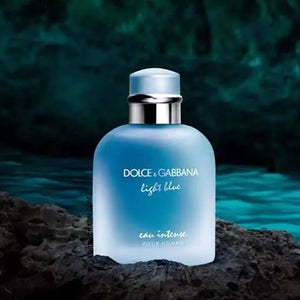
D&G Light Blue Eau Intense EDP (Eau de Parfum) 100ML Women Perfume
D&G Intenso EDP (Eau De Parfum) 125ML Men Perfume
Calvin Klein Man EDT (Eau de Toilette) 100ML – Men’s Perfume
Calvin Klein DEFY EDT (Eau De Toilette) 100ML – Men’s Perfume
Calvin Klein CK in U 2 EDT (Eau de Toilette) 100ML – Men’s Perfume
Calvin Klein CK Free EDT (Eau De Toilette) 100ML – Men’s Perfume
Calvin Klein CK BE EDT (Eau de Toilette) 100ML – Unisex Perfume
Burberry London EDT (Eau de Toilette) 100ML – Men’s Perfume
Frequently Asked Questions
1. Why does the same perfume smell different on different people?
This is due to your unique skin chemistry. Factors such as your skin's pH balance, oil levels, diet, and even body temperature can interact with the fragrance notes. For example, oily skin tends to hold onto scent molecules longer, while dry skin may cause the fragrance to evaporate more quickly.
2. What is the difference between "fragrance notes" and "ingredients"?
Notes are descriptors of the scents you perceive (like "Rose" or "Sandalwood"), whereas ingredients are the actual chemical or natural compounds used to create those scents. A "Rose" note might be created using natural rose otto or a blend of several different aromatic molecules.
3. How can I make my perfume last all day?
Applying perfume to moisturized skin is the most effective method. Fragrance "sticks" better to oils. Use a fragrance-free lotion or a matching body cream before spraying. Also, focus on pulse points and consider spraying your hair or clothes (at a distance) as fabric and hair fibers hold scent longer than skin.
4. What is "sillage" in perfumery?
Sillage (pronounced "see-yazh") is a French word referring to the trail or "wake" left by a perfume. A fragrance with "strong sillage" can be smelled by others even after you have walked away from a space, while "intimate sillage" stays closer to the skin.
5. Do perfumes expire?
Yes, perfumes can degrade over time. On average, a bottle remains at peak quality for 3 to 5 years. You can tell a perfume has expired if the liquid becomes cloudy, the color darkens significantly, or the scent begins to smell sour or vinegary.
6. Is it safe to wear perfume if I have sensitive skin?
If you have highly reactive skin, it is best to apply perfume to your clothing or hair rather than directly onto your skin. This allows you to enjoy the scent without the risk of contact dermatitis. Always perform a patch test on a small area of skin if you choose to apply it topically.
7. Can I wear premium perfumes in the sun?
Some fragrance ingredients, particularly citrus oils (bergamot, lemon), can be "photosensitive," meaning they may cause skin irritation or dark spots when exposed to UV light. In the summer or at the beach, it is safer to spray perfume on your clothes rather than on sun-exposed skin.
8. What is the best way to test a new perfume?
Never test more than three scents at once, as your nose will experience "olfactory fatigue." Spray the scent on a paper blotter first; if you like it, apply it to your wrist and wait at least 30 minutes to see how the heart and base notes develop on your skin before purchasing.
9. Why can’t I smell my own perfume after an hour?
This is called "olfactory adaptation" or "nose blindness." Your brain eventually filters out a constant scent so it can detect new smells in the environment. Even if you can no longer smell it, those around you likely can.
10. What are "unisex" perfumes?
Unisex perfumes are gender-neutral fragrances designed to be worn by anyone. They often focus on woody, spicy, or fresh notes that do not lean heavily into traditional "masculine" or "feminine" categories. Many premium and niche perfumes are now formulated as unisex to emphasize the artistry of the scent itself.