Suffering from Shoe Contact Eczema? Find Relief at Skin Clinic by Dr. Eram Razzaq Bahria Town Lahore

Pay in 3 Installments of
Rs.
1341


 JazzCash
 easypaisa
 NayaPay


 Bank transfer
Cash on Delivery
Bank transfer
Cash on Delivery
Description
Shoe Contact Eczema Treatment at Skin Clinic by Dr. Eram Razzaq
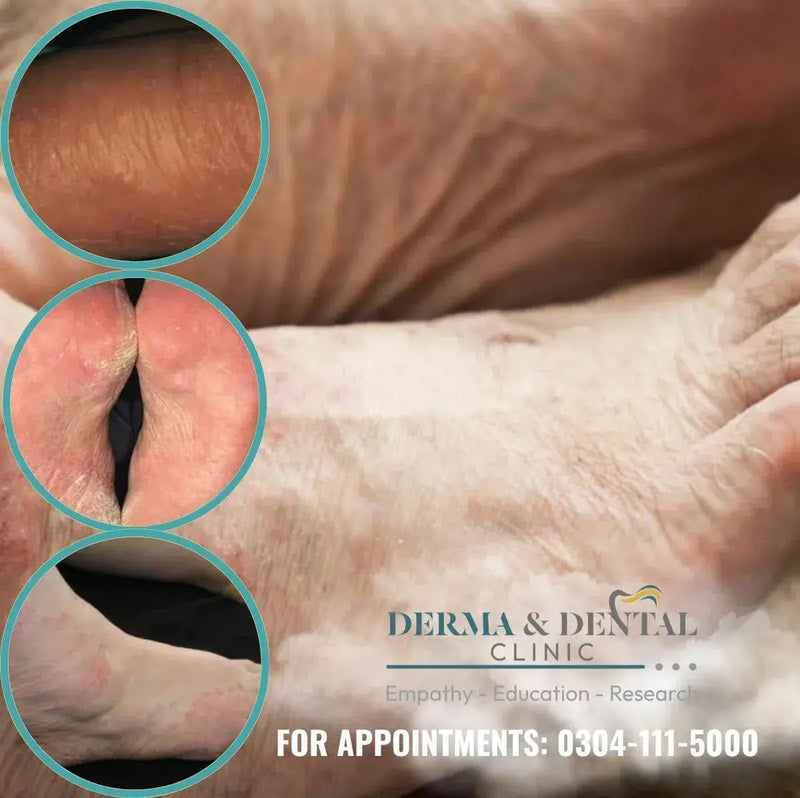
Shoe contact eczema is an allergic or irritant dermatitis caused by chemicals in footwear — commonly chromate (in tanned leather), rubber accelerators, glues and dyes — worsened by sweat and friction. It typically affects the tops of the feet and toes with itching, scaling, vesicles or fissures. At Skin Clinic by Dr. Eram Razzaq, Bahria Town Lahore, our dermatologists confirm the diagnosis, take a detailed footwear history, and where indicated arrange patch testing to pinpoint the offending allergen. Active flares are settled with prescription topical corticosteroids; long-term control depends on avoiding identified allergens, choosing safer footwear (chrome-free leather or fabric), moisture management and barrier care. There is no cure if you remain exposed to the trigger — strict avoidance is essential.
Consultation is required. To book an appointment at the clinic, call 03041115000.
Usage & Benefits
- Dermatologist diagnosis differentiating allergic, irritant and atopic foot eczema
- Detailed footwear and occupation history to find the trigger
- Referral pathway for patch testing to confirm the allergen
- Prescription topical regimen to settle flares safely
- Written guidance on safer footwear materials and brands
- Moisture, friction and sock management plan
- Honest framing: no cure without trigger avoidance
- Follow-up at Bahria Town Lahore to confirm control
How To Use
1. Book a consultation at Derma & Dental Clinic Bahria Town Lahore.
2. Bring the shoes you currently wear (or photos and labels), plus details of work footwear.
3. The dermatologist will examine your feet and may arrange patch testing.
4. Stop wearing suspect footwear and follow your dermatologist’s written avoidance list.
5. Apply prescribed topical treatment exactly as directed during flares.
6. Use moisture-wicking cotton socks, change them daily, and keep feet clean and dry.
7. Choose footwear made from confirmed safe materials — your dermatologist will guide options.
8. Attend follow-up to confirm response and plan long-term avoidance.
FAQs
Can shoe contact eczema be cured?
It clears only if the trigger is identified and strictly avoided. With ongoing exposure, the rash will return.
What are the most common allergens?
Chromate in tanned leather, rubber accelerators, glues and dyes. Patch testing helps identify which apply to you.
Why do my feet flare in summer?
Sweat increases the leaching of chemicals from footwear and irritates already-inflamed skin.
Is patch testing painful?
No. Patches are worn on the back for about 48 hours and then read by a dermatologist.
Where is the clinic?
Derma & Dental Clinic, Bahria Town Lahore.