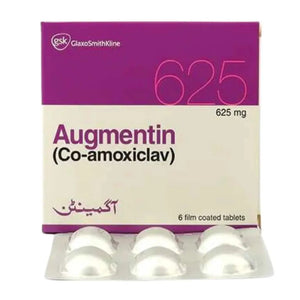
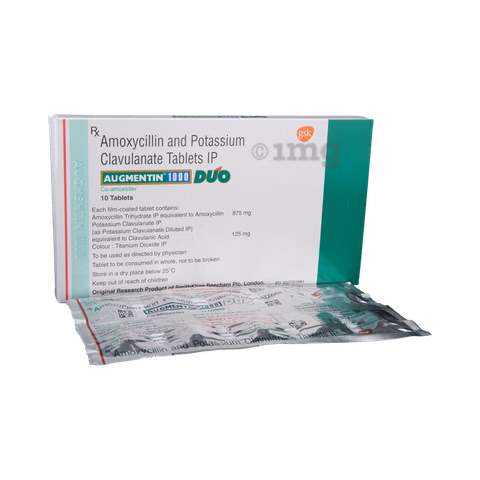


Augmentin 1g Tablets — Amoxicillin & Clavulanate Antibiotic

Pay in 3 Installments of
Rs.
138


 JazzCash
 easypaisa
 NayaPay


 Bank transfer
Cash on Delivery
Bank transfer
Cash on Delivery
Description
Augmentin 1g Tablets — Amoxicillin & Clavulanate Antibiotic
Augmentin 1g Tablets are a broad-spectrum antibiotic combining Amoxicillin 875mg and Clavulanate Potassium 125mg. Amoxicillin is a beta-lactam antibiotic that inhibits bacterial cell wall synthesis, while Clavulanate acts as a beta-lactamase inhibitor — protecting Amoxicillin from enzyme destruction by resistant bacteria and thereby extending its antibacterial spectrum significantly.
This combination makes Augmentin effective against many bacteria resistant to plain amoxicillin. It is commonly prescribed for moderate to severe infections of the respiratory tract, ears, sinuses, urinary tract, skin and soft tissues.
Key Benefits / Uses
- Treats community-acquired pneumonia and acute bronchitis
- Effective for ear and sinus infections (otitis media, sinusitis)
- Used for urinary tract infections caused by resistant organisms
- Manages skin, wound and soft tissue infections
- Overcomes beta-lactamase producing bacterial resistance
How to Use
Take one Augmentin 1g tablet every 12 hours (or as directed by your doctor), swallowed whole at the start of a meal. Taking with food enhances absorption and minimises gastric side effects. Complete the full prescribed course — do not stop early even if you feel better, as incomplete treatment can lead to antibiotic resistance.
Safety Information
- Rx — prescription required.
- Penicillin allergy warning: Do not use if you are allergic to penicillin, amoxicillin, clavulanate or any beta-lactam antibiotic. Anaphylactic reactions are possible.
- Hepatotoxicity warning (Augmentin-specific): Augmentin (amoxicillin-clavulanate) carries a higher risk of cholestatic jaundice and hepatic dysfunction than plain amoxicillin. Monitor for jaundice, dark urine or abdominal pain and stop immediately if these occur.
- Avoid in patients with a history of Augmentin-associated liver problems.
- Monitor liver function in patients receiving prolonged therapy.
- May cause nausea, diarrhoea, or rash. Severe diarrhoea may indicate C. difficile-associated colitis.
Explore antibiotics for bacterial infections and our full range of tablets and capsules at Derma.pk — pharmacist-verified, delivered nationwide across Pakistan.
Usage & Benefits
- Broad-spectrum coverage including beta-lactamase producing resistant bacteria
- Treats pneumonia, sinusitis, ear infections, UTIs and skin infections
- Clavulanate extends Amoxicillin activity against resistant strains
- Suitable for moderate to severe bacterial infections
- Clinically trusted first-line antibiotic in community and hospital settings
How To Use
Take one Augmentin 1g tablet every 12 hours as prescribed by your doctor. Swallow whole at the start of a meal with a glass of water — food enhances absorption and reduces gastric side effects. Complete the full prescribed course. Do not skip doses or stop early even if you feel better.
FAQs
Why does Augmentin contain Clavulanate as well as Amoxicillin?
Clavulanate is a beta-lactamase inhibitor that prevents resistant bacteria from destroying Amoxicillin, giving Augmentin a broader spectrum than plain amoxicillin alone.
Can Augmentin cause liver problems?
Yes — Augmentin (amoxicillin-clavulanate) carries a specific risk of cholestatic jaundice and hepatic dysfunction. Stop immediately and contact your doctor if you notice jaundice, dark urine or abdominal pain.
Is Augmentin safe if I am allergic to penicillin?
No. Inform your doctor of any penicillin or beta-lactam allergy before use — serious allergic reactions including anaphylaxis are possible.