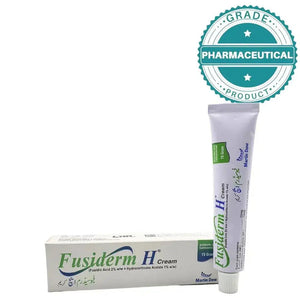


Fusiderm Ointment 15g

Pay in 3 Installments of
Rs.
101


 JazzCash
 easypaisa
 NayaPay


 Bank transfer
Cash on Delivery
Bank transfer
Cash on Delivery
Description
Fusiderm Ointment: A Comprehensive Guide
Introduction
Fusiderm Ointment is a powerful tool in the fight against skin infections. This article delves into its composition, therapeutic uses, how it works, proper application, contraindications, precautions, and potential side effects.
Composition
Sodium Fusidate, a potent antibiotic, is the star ingredient of Fusiderm Ointment. Derived from specific strains of fusidium coccinea, it effectively tackles various skin infections.
Therapeutic Uses
Fusiderm Ointment shines in treating both primary and secondary skin infections. This includes impetigo, superficial folliculitis, sycosis barbae, paronychia, erythrasma, and other conditions caused by susceptible microorganisms like Staphylococcus, Streptococcus, and Corynebacterium minutissimum.
Clinical Pharmacology
The action hero in Fusiderm Ointment is Sodium Fusidate, which disrupts protein synthesis. By hindering amino acid transfer within ribosomes, it effectively weakens and eliminates bacteria. The ointment readily penetrates intact skin and primarily exits through the bile, with minimal urinary excretion.
Dosage and Administration
Fusiderm Ointment requires direct application to the affected areas. The frequency depends on the type of lesion. Uncovered lesions may need 3-4 daily applications, while covered ones might suffice with 1-2. Removing crusts in impetigo contagiosa is unnecessary.
Contraindications
Hypersensitivity to any component of the ointment is a no-go for using Fusiderm. Additionally, extended or repeated use is discouraged, as it can lead to antibiotic resistance or skin sensitization.
Warnings and Precautions
Pregnant women should tread cautiously with Fusiderm Ointment and only use it if absolutely necessary. Overdose is unlikely, but the ointment may contain ingredients that trigger local skin reactions, eye irritation, or mucous membrane discomfort.
Adverse Effects
Itching, rash, pain, and irritation are the most common side effects. In rare cases, hypersensitivity, angioedema, conjunctivitis, contact dermatitis, eczema, and other skin problems might occur.
Packs and Stability
It comes in 15g packs. To maintain its potency, store it below 30 °C, away from light and heat.
Instructions
It is strictly for external use. Follow the prescription of a qualified healthcare professional and keep it out of reach of children. Breastfeeding mothers should use it with caution.
Conclusion
with its effective composition, targeted action, and clear instructions, stands as a reliable weapon against a diverse range of skin infections. Always remember to adhere to your doctor's advice to ensure safe and effective treatment.
Usage & Benefits
- Sodium fusidate 2% acts against Staphylococcus aureus and other Gram-positive skin pathogens
- Treats impetigo, folliculitis, sycosis barbae, and paronychia
- Clears erythrasma caused by Corynebacterium minutissimum
- Manages secondary infection of eczema and dermatitis
- Ointment base soothes and protects dry, crusted lesions
How To Use
- Clean and dry the affected area before applying.
- Apply a thin layer of Fusiderm Ointment 3 to 4 times daily, or as prescribed.
- When a dressing is used, less frequent application may be sufficient.
- Wash hands after application.
- Use for the full prescribed course (usually 7 days) to reduce the risk of antibiotic resistance.
- Avoid contact with eyes; do not use for prolonged courses on large areas without medical supervision.
FAQs
What is Fusiderm Ointment used for?
It treats bacterial skin infections such as impetigo, folliculitis, paronychia, and infected eczema.
How is it different from Fucidin H?
Plain Fusiderm contains only the antibiotic. Combination products add a steroid for inflamed skin and are different formulations.
Can I use it on children?
Yes when prescribed by a doctor. Avoid the eye area.
What side effects may occur?
Mild burning, stinging, redness, or contact dermatitis at the site of application.
Is a prescription required?
Yes, Fusiderm Ointment is a prescription antibiotic.